CHAPTER THREE
THE BECOMING
HASTY LANDING, ARKANSAS
JUNE 9, 1864
If Sheba MacPherson looked like a ham roughly carved and topped with an unpredictable tousle, well, Daisy Garfield was like unto an angel or a fantasy. William was first taken by her hair, "spun gold," or so he murmured to himself, though he had surely read such in a poem somewhere. She would put her hair up prior to housework, but soon enough curls and sprays of gold would come unhitched and dangle against her cheeks and fine jawline; so William observed when she stood framed in the roadward-facing window. Daisy had light brown eyes, closer to amber, with sparkles of green in the irises. Her skin was un-pitted and smooth, more like a persimmon than a lemon, not bone white but cream white, or better yet, peachy cream, with hue of strawberries. But beauty is hard to capture, whether on canvas or in words. And, of course, beauty is everything. In the end we will be saved, if we are saved, by beauty.
Daisy Garfield had never not been beautiful. When she was a little girl, her father, who like her husband was named John held her in awe, one supposes because he himself was not particularly handsome nor was his wife considered pretty. John Dilby had yellow hair that had begun to thin before he joined the ranks of the 27th Arkansas Infantry Regiment, though he was a young man not yet twenty when he enlisted. He and his Confederate comrades spasmodically fought their Union-sympathizing neighbors, who were themselves backed by foreign, which is to say Yankee, soldiers throughout Newton County—this particular spasm of fratricide occurring in upper Arkansas—until a Union cavalry regiment entered the town of Onyx hunting for General Cecil, the self-appointed leader of a band of guerrilla warriors who had vexed the Union soldiers in the extreme. In the course of their proceedings, the Blues burned Onyx to the ground and shot up the local citizenry in clear violation of all just war principles. Only a short time before, John Dilby had sought refuge in Onyx with a girl who was herself a refugee from Tennessee; they were ensconced in something like love above a dry goods store, when Dilby heard the fracas and ingloriously leapt from the back-bedroom window and left the girl to whatever fate the Yankees might enjoy. Dilby's hejira took place in the dead of night, and he ran low, cold, and half-naked through the open streets, with just enough moon to light his way to the banks of the Little Buffalo, whereupon he flung himself into the cold April waters and undertook a long, scrambling float to the Buffalo River proper. Fortunately for John, he was able to cling to a tree limb large enough to carry him down river until he climbed, blue and feverish, onto the bank at Hasty Landing.
Every man's history—and woman's, too—is a long tangle of toil and tedium, so suffice it to say that John Dilby quickly reinvented himself as an Independent, owing loyalties to neither North nor South but pledging allegiance only to himself. He found a job felling timber, met a plain girl, Beulah Thrush, also with blond thinning hair, and they married in September of 1864. Ten months later, Beulah underwent her travail, and on June 9, 1865, precisely two months after Appomattox, Daisy Dilby was born.
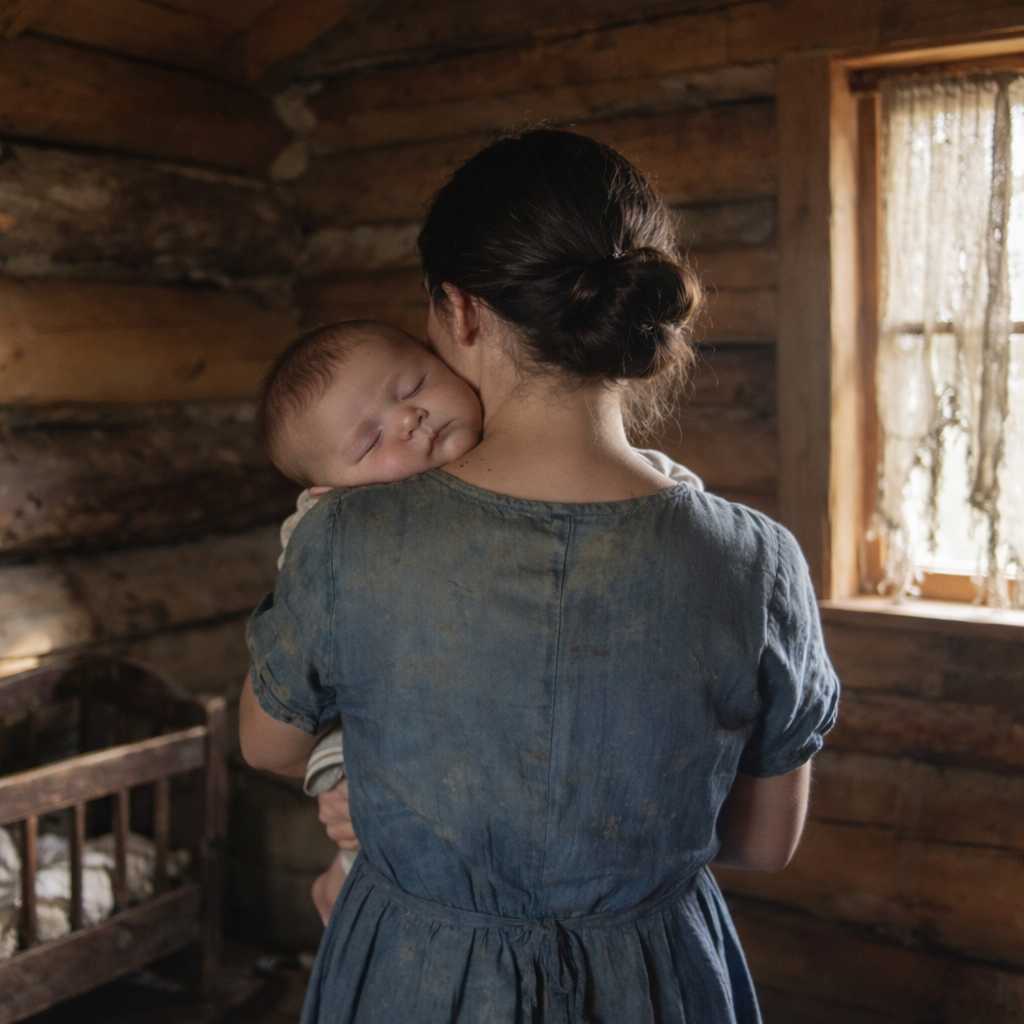
John Dilby, as was customary for the time, waited in the front room of his cabin, his head down as his wife screamed, until the last God-awful cry and push. Then silence. Suddenly, a small wail, like a cat in a cracker box, and soon enough the midwife brings the child to John and lays her in his arms. John was like a pagan transgressing in the precinct of the numinous. The first wave of awe, like the cold waters of the Buffalo, caught him and bore him into an eddy, tucked in by a violeted bank and beneath three willows. And in the stillness of slowly turning time, John Dilby became more than himself: All was ennobled, all was changed. Never again would he be content in merely saving himself. Prior to his Becoming, Beulah must have known, surely suspected, that John would have abandoned her if the spinning Goddess of Fortune had but whispered in his ear, "Quick, quick! Hear the tramping feet? Fly, John Dilby, fly!" And John, heeding but the intimation of destruction, would have leapt to the street, leaving Beulah to endure the ferocity of a faceless enemy. But in the Becoming, John learned fidelity and the fierce will to protect. He kissed his baby girl on her forehead and was lifting her to the midwife, when he checked himself and stood. Then carrying the child to Beulah, he laid Daisy on her mother's breast and leaned over to kiss his exhausted wife on her forehead. Two kisses, gentle and unprecedented: Beulah smiled weakly, and John gazed at his wife in prolonged gratitude. For the first time, he wondered how it is that a woman, any woman, could invest all she is, all the longing of her youth and the hopes for her future, in one selfish, plain, and fickle man and say to him, "You . . . I choose you." And how is it from her reckless decision that someone so beautiful could emerge, so mildly weak and yet so strong in her will to live and flourish? John looked lovingly—with a look Beulah had never seen before—at the mother and child; his Becoming had begun.
John left Beulah and Daisy in the midwife's care, shouldered his axe, and returned to his work. The crew had left the lumber barn, for it was mid-morning when he walked into the camp, but the agent was not a bad man, and he forgave John the hours missed, though he refused to pay him. He was about to send John back to the forest, when John reached out and touched him cautiously on the back. The agent turned. "Yeah?"
"I got me a new baby girl."
"So you said. I'm happy fer you."
"I need to be somethin' more. Fer her and my woman. I can swing a axe now, but won't always be that way. And I can do more; I surely think I can. If I stay after work, would you show me some of what you write down in that there book?" And here John pointed to the big bound book in which the agent inscribed the mysteries of acquisition, sales, and profits.
"You want I should teach you?"
"Yessir. I think maybe I can figure. If someone was to learn me."
"Well, atsa big question. But I'm us'ly here awhile after you'uns knock off. So, yeah, come see me after the whistle blows, and I'll learn you what I can."
So that afternoon, after eight hours of relentless sawing and chopping, felling and hewing, John entered deeper into the Becoming when the agent opened to him the long bewildering columns of squares and numbers, overwhelming in their complexity, like a strange language encoding the sweat and stink of an army of grasshoppers. In the coded columns, John could almost hear the axe blows thudding and the forest falling as if an army had laid them waste. For the squares were a structure and code for the activity of destruction, very like unto the way Homeric hexameters catalog the bloody butchery of war.
The next day, the columns, boxes, and numbers were a bit more familiar, and gradually, as the Becoming was birthed into Manifestation, by degrees, the big book lost its mystery altogether. The inner sanctum of business, John learned, contained not a transcendent deity but a human work of undeniable practicality. John had learned how to figure when he was a boy, but he had not realized the power of that skill. All he had to do was learn the order, the purpose of the squares and the power of carrying numbers from one column to another. Then he had to link that skill to the hard realities of wood and steam and payroll. For John was no longer satisfied with being a woodsman nor was he content to be an accountant. Beauty had provoked Desire, and Desire had swept its arm forward as if gesturing the way to Becoming, the threshold of Manifestation. And Manifestation appeared to John Dilby like a temple into which Beauty could enter and remove her veil. John became the agent for a rival company, but he and Beulah continued to live frugally as if he were still a woodsman, and they put their money away in a cracker tin behind the trousseau. In lieu of church, they practiced a ritual of economy: On Sunday mornings they would count John's earnings, sitting on the edge of the bed and heaping little mounds of coins and bills on the blanket, as baby Daisy kicked and cooed in her crib. Their tomorrows were charged with hope and promise.