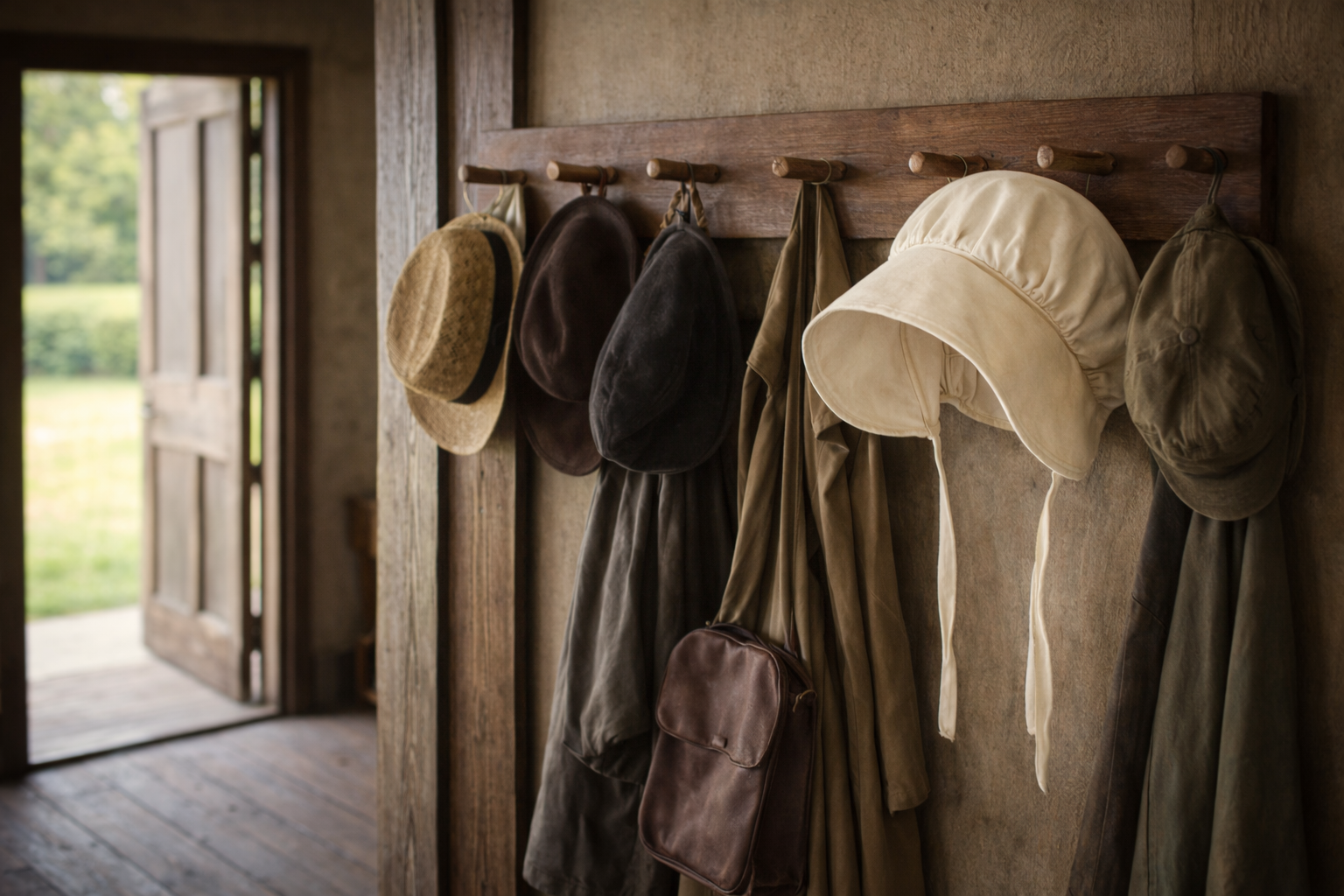
Daisy Dilby at the one-room schoolhouse.
Robert Hardcastle was the new teacher; he had studied teaching—or so the locals called it, being suspicious of a discipline as fancy sounding as "education"—at the recently founded University of Arkansas in Fayetteville. As old Barnes Farber said, "I don't give a hang if my boy's eddicated; I just want him to be able to read, figger, and sign his name." Robert, that is, Mr. Hardcastle, was twenty years of age, relatively young in years because he had earned a two-year certificate, four years having been deemed a useless extravagance with the rural need so great. In fact, he was not much older than his oldest students; Daniel Stumpff was nineteen and would turn twenty before he graduated, and even that depended on his being turned loose from farm chores long enough to complete his schooling.
So the students gathered in early September, with the first twinge of fall still a week or two off; the older boys sat in the back and cut up while the younger students sat toward the front. Mr. Hardcastle stood, silent and grim at the front of the room, with his hands behind his back; in his right hand was a yardstick that he tapped on the back of his ankle. The cutting up swelled in volume and was verging on an uproar, with the younger kids grinning and craning around to see what the older kids were up to, when Mr. Hardcastle arced the yardstick up over his head and brought it "whack!" down on the desk so hard that the first foot or so splintered off and went flicking through the air to clatter at the feet of Daisy, who sat precisely in the middle of the room, her head bonneted and her dress pristinely white with rusty stains. The motion was peremptory and effective, and the class fell silent, not out of fear or intimidation but simply out of surprise. The students who had been looking out the window or were looking back over their shoulders had the momentary thrill that someone had been shot, and it wasn't them.
"That's better. My name is Mr. Hardcastle, and I'm from Bentonville. I earned my degree from the University of Arkansas, and I'm going to create some kind of civilization over here in these hills, so maybe someday some of you will go to the University and make something of yourselves, especially you boys. I know you kids are busy with working the farms and helping with the woodcutting—I understand that and do not reproach you for it. But there's another kind of work that goes on up here"—and here Mr. Hardcastle began tapping his head with his left hand—"and it will take you a lot more labor to get this in order than to till your field. Of course, we must have rules: you can't have order in your head if you don't have order in your life. You there"—and Mr. Hardcastle pointed the sharp end of the yardstick like a rapier at Daisy—"what's your name?"
"Miss Daisy Dilby," said Daisy from under the brim of her bonnet.
"Well, Miss Daisy Dilby, you're going to have to take off your bonnet in here. The only place a woman should have her head covered inside is the church building where covering your head shows respect, both for the Lord and for the menfolk, who are your natural betters and have the sole right of speaking in the church, and that's according to Scripture.
"But when you step through that door—this goes for you boys, too—you are to doff your hats and hang them from one of those pegs." And he gestured with the long, splintered point of the yardstick to the pegs by the side door of the school. The students saw the pegs and understood.
"So what are you waiting for, Miss Daisy Dilby? I said, take off your bonnet."
Without hurry, Daisy untied the strings beneath her chin and let them hang limply to either side. Her motions were simple and should have been without significance, but the apparent indolence of her efforts inadvertently charged the atmosphere with a kind of defiant anticipation. The class was breathless, and even Mr. Hardcastle, though he had admonished Daisy only to establish order and assert his dominance, found himself fascinated with the languorous and therefore dramatic removal of her bonnet. She lifted her hands to the sides of her bonnet and gently removed it, tilting it forward over her face, whereupon her spun-gold hair fell to her shoulders. Then she stood, a virgin slip of a girl in a pristinely white, dimly stained smock, and stepped carefully between the feet and desks of her classmates; she continued forward down the right aisle of the classroom between the wall and the rows of desks and hung her bonnet on a peg. Then she walked deliberately and unhurriedly back to her desk, looking neither left nor right, until such time as she once again had to navigate feet and desks to return to her place. She sat down and looked Mr. Hardcastle full in the face. What would have seemed insolence in anyone else was in her innocent consistency.
Mr. Hardcastle was stunned. He knew he had to recover and quickly, for the students would see he was undone and begin to taunt him if they suspected his infatuation or worse yet, would tell their parents about the new school teacher who went all googly-eyed over a fourteen-year-old girl. So Mr. Hardcastle made as if he was looking for something on his desk, though nothing was there, his books having been deposited on a shelf by the door when he came in. Still looking down, he gulped without trying to make a noise, and then looked up. "Maybe we should get to know each other," he said. "Let's start up here with you younger ones. Tell me your name and what part of the county you're from. You there," and he nodded to a little boy sitting in the front row to his left, "you begin."