Chapter Six
The Offices of the Springfield Leader
The cab circled the square and pulled up before the limestone and red-brick façade of The Springfield Leader. Mack paid the cabman through the hatch, grabbed the picnic basket and valise, and hopped down to the sidewalk. For a full minute, he stood looking at the building, and then he pushed his way through the revolving door and into the lobby of a massive room throbbing with activity. On his right, girls behind desks were reading copy or framing type with quoins, while behind the girls, men with green visors were jabbing at adding machines or picking out pieces of type with tweezers; on his left, boys were rolling papers and stuffing them into canvas sacks. And all the while, a steady ka-thumping of presses thrummed from everywhere. Mack looked up to see a broad balcony with a low wall running around three sides of the second story, and placed end to end were presses; there he saw endless iterations of himself, young men turning wheels and looking through grimed windows to a fresh green world outside. He also saw his father in the old men who fed newsprint to the mechanical fingers that gripped the paper.
All right, fellows, if that's how you're gonna spend your lives, you'd better by God hope there's a heaven because otherwise what was the point of living at all?
Below the balcony were tall windows through which broad shafts of light fell in oblong rectangles on the polished oak floor. One of those rectangles fell on a pretty girl sitting at her desk; she was reading an article and chewing on the end of a pencil. Motes of dust danced in the gold shaft, and when she looked up, the light made her blue eyes gleam. Her skin was bright and flawless, and her blue blouse and white collar shone with Madonna-like radiance.
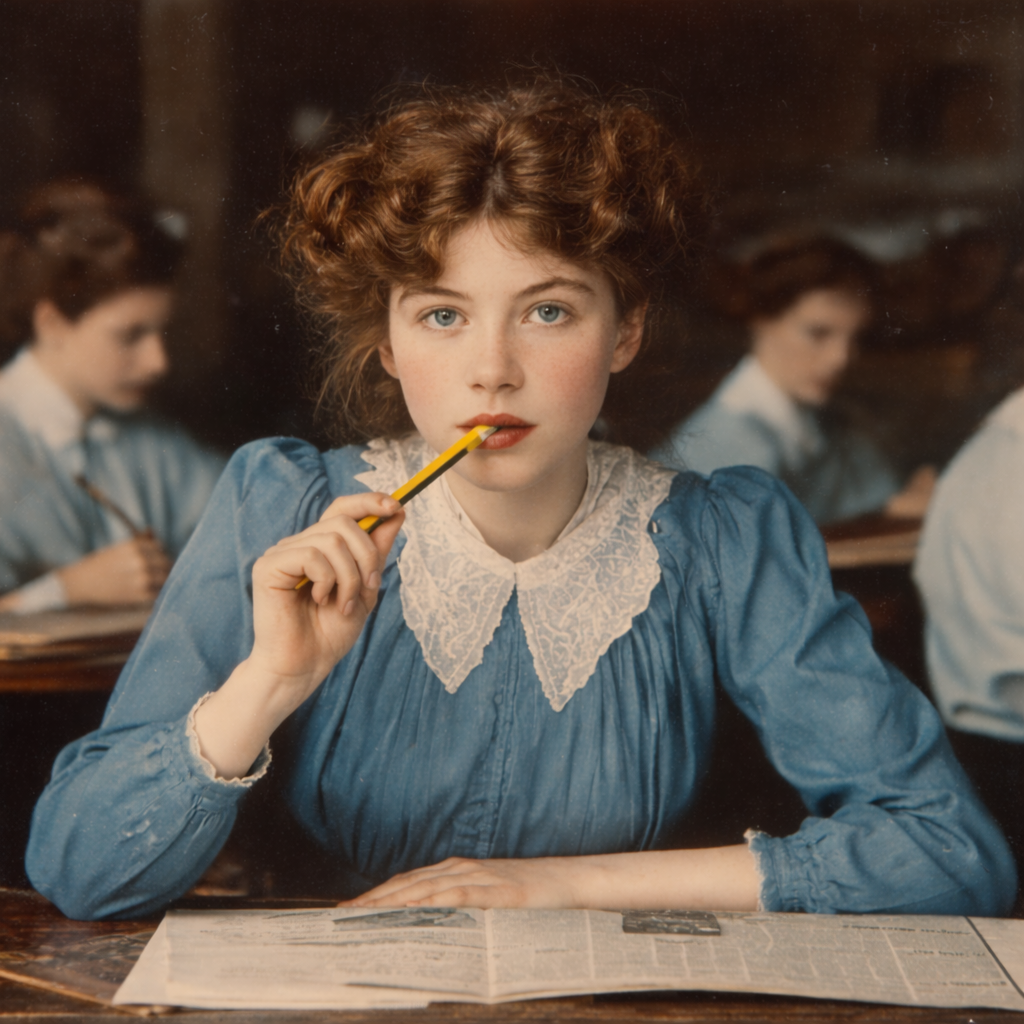
When she saw that Mack was staring at her, she frowned and returned to her work.
Mack continued his inspection of the room. Toward the back and against the left wall was a cage elevator that rose and fell in continuous motion; on the top landing men stacked newspapers onto pallets and rolled the pallets into the elevator, while on the floor, men rolled the newspapers into the dark recesses at the back of the building. Everything smelled of ink and oil and tobacco, and in spite of the size of the room and the hubbub of the operation, Mack felt his confidence returning. He knew this world. On the right and behind the desks of the girls and the green-visored accountants was a wainscot wall with frosted glass extending to the ceiling; in the middle of that wall was a hallway, which Mack surmised led to the parts closet. Also, there was a sign with the word "PARTS" stenciled on it and an arrow pointing toward the hall. Still, Mack wanted to talk to the pretty girl, and he needed an excuse, so he set his things on a bench and started in her direction. At that same moment, the revolving door spun inward, and a tall, lumpish man lurched into the lobby. He recovered his balance and stood scowling and muttering at the activity. The man was notable, not only because of his height and attire—a rumpled, blue-striped seersucker suit and a straw hat pulled low over his brows—and the scope of his nose—more on that to come—but primarily because of his obvious fury. He was a caricature of rancor, a toad determined to piss in somebody's hand. Pulling a cigar from his jacket pocket, he bit off one end and spat it with superb accuracy into a cuspidor by the door. He lit the cigar and exhaled a wavering portal through which he continued to glare. Suddenly, he turned to Mack and shouted, "What does it take to get somebody's goddamn attention around here?" The pretty girl glanced up and frowned more severely.
The man said, "Nary a one of these people has so much as acknowledged my presence! They are acting as if you and I don't exist!" He flushed so red that Mack fancied he might combust.
Wow. That is one angry fellow. This could be fun.
So, Mack did not reply: Instead, he watched the man with the kind of detachment one might employ when observing a bear that had just drunk a pail of whiskey. This interim gave Mack time to observe more carefully the man's salient feature: his aforementioned nose, a squat and carbuncular mass apparently intent on overtaking the entirety of his face. The nose was engorged with rage; it flared like a beacon; it pulsed. In brief, the nose was a fierce, gelatinous, off-putting protuberance, a nose quick to anger and slow to forgive, the nose of a dissipated Pinocchio, a senescent Cyrano, a backwoods Bardolph.
On either side of this probiscidiform malformation glared piggish eyes of blue with yellow sclera, eyes better to look out of than to look into, accessories, apparently, to the seersucker suit, which was also light blue and yellowish at the cuffs. The safety pin that fastened the man's trousers left a disconcerting gap in the fly, the suspenders beneath his jacket were red, and his shoes were incongruously buffed to a high sheen. The whole of his appearance evoked a banjo player about to break into an obscene parody of "Oh, Susanna.'' The man shouted to Mack: "How long have you been here?"
"Me? I just got here."
"Who else would I be talking to?" Glaring about the room again. "Apparently, no one else in this place knows how to talk." Back to Mack. "Are you here for a job? You look like you're here for a job."
"No, sir. I came to purchase parts for a printing press."
"Who do you work for?"
"The Neosho Rustler. But I own it. I don't work for anybody."
"Mighty young to talk so big." The man cocked his head. "Neosho, you say? I was there once. Used to be a house of pleasure called the Bumpkin Bunny on the east edge of town. Ever heard of it?"
"No, sir," Mack lied.
"My opinion has ever been that if these picayune towns tore down their courthouses and replaced 'em with whorehouses, they'd be better managed and more profitable, too. The towns, that is, not the whorehouses, though I suppose it would work both ways. I spent a pleasant night at the Bumpkin, must've been, damn, thirty years ago. Are you sure you've never been there?"
"No, sir." Mack thought about the poor girl who had to accommodate this fellow, but, Who knows, he may have been handsome thirty years ago. His nose may have been less ambitious.
From hour to hour we ripe and ripe, and from hour to hour, we rot and rot, and thereby hangs a tale.
"What's all this 'sir' shit? How old do you think I am anyhow? I'm no more a 'sir' than you are."
"My parents raised me to say 'sir.'"
"Hell, they brought you up to kiss asses, you mean. The old lady and I were never burdened with offspring, but if we had been, I wouldn't have saddled them with a bunch of kiss ass rules."
Mack smirked inwardly and asked, "What is your business here, sir?"
From combustion to conflagration, and the man roared, "Godammit, don't 'sir' me! Are you deaf and stupid, too?" He puffed and flared, and his shoulders rolled forward like a toad preparing to lunge at a spider, when he abruptly assumed a more posture.
"Sorry for my ill temper. I've been libeled, and I'm hunting a lying, prevaricating"—his voice began rising again—"little sonuvabitch by the name of Otis Bulfinch who writes for this paragon of yellow journalism, and I'm going to sue him and the Leader and anyone else who libels my good name! I know my way around the law, and I know my rights!"
Mack asked, "Are you a newspaperman?"
In an attitude of royal dignity, the man straightened his stance, lifted his chin, and said, "I am owner and editor of the finest news organ in the Ozarks region, nay, the state of Missouri, in brief, The Plain Dealer of Mountain Grove. And no one, no one, will defame my good name without being held to account!!" Then speaking loudly to the hub-bub at large, "Do you hear me? My name is Glenn, M. S. Glenn, and a reporter for this rag of a paper is a calumniator and a liar and"—Glenn sputtered in rage—"a goddamn libelist! Yes, a libelist! Spoken lies may be uttered in passion, but written lies belie cold calculation and a rotten character and editorial irresponsibility. And I will not stand for it!"
Mack said, "It's nice to meet you, Mr. Glenn. My name's T. Allen McQuary, but my friends call me 'Mack.'"
Glenn ignored Mack's proffered hand and said, "Do you know what that little sonuvabitch called me in his column?"
"I do not."
"He said I was a fraud. A charlatan. A hornswoggler. And you know why?"
"No."
"Because the insurance company I represent didn't pay out on a policy purchased by his mother, who, I'm sorry to say, began long ago exhibiting signs of senility and should not have been trusted with her own affairs." Speaking to the room again, Glenn declaimed, "But it was the insurance company's fault, not mine! I am not nor have I ever been a hornswoggler!"
Mack said, "What happened?"
"Apparently the woman's house caught fire and burned to the ground and the flames spread across the yard and burned her barn to the ground, and she got out with nothing but her nightgown and the family Bible. I mean, I do feel sorry for her." He paused in momentary regret and then flared out again, "But I didn't start the damned fire!"
"Why didn't the insurance company pay out?"
"Some mix up in the paperwork," he said vaguely. "But that wasn't my fault either! And it is libel to claim that it was! At the very least, the very least, mind you, it is incumbent on an honest and responsible reporter to provide evidence and not traffic in mere conjecture. Am I right? Am I?"
"I guess."
"You guess? Great God in heaven, Sunt omnes stulti?" Glenn's fury bore him to the threshold of glossolalia, but he recovered enough to say, "As a newspaperman you should know there is to be no guesswork in matters of defamation!" Another abrupt shift in tone, and his nose subsided.
"I'll ask that pretty girl over there what she knows about Bulfinch." Glenn was referring to the sunlit girl who had been ignoring him as best she could. Hitching his britches, he said, "I will therefore turn on the old charm." Glenn removed his hat and shambled forward to the girl.
"Mornin', darlin, I was wondering if you could help me find somebody?"
It occurred to Mack that Glenn's conversation with the pretty girl might provide him an opportunity, so he sidled up and stood quietly at Glenn's elbow. The girl was listening to Glenn's (somewhat subdued) tirade, which gave Mack the chance to study her more closely. She took the pencil out of her mouth and put it behind her ear. The chewed end of the pencil glistened with saliva, and her opalescent ear reminded Mack of a seashell his mother kept on a bric-a-brac shelf in the parlor. Meanwhile, her anger at Glenn made her blue eyes water, and tears pooled on the lower lids. Her lips—oh, God—her full, coral lips were quivering and slightly apart. And crowning all, her chestnut hair caught the sun, and shining among the tresses were strands of cinnamon and copper, and her hair fell about her shoulders. Her white collar and blue blouse led Mack to profound considerations of what lay beneath.
Mack was startled from this reverie when the girl said to him, "And what about you? Did no one ever teach you it's impolite to stare?"
"Oh, uh. I'm sorry. I was thinking of something else. I just need to speak with someone about purchasing a part."
Glenn scowled at Mack and turned to the girl. "Pay no attention to him. The boy's whatcha call 'deficient.'" Glenn tapped the side of his head. "Now, darlin, let me explain this to you as clearly as I can: I need to talk with Otis Bulfinch. He has done me a severe injustice and—"
As Glenn continued with exaggerated patience, Mack contrasted the ugly man in the seersucker suit with the pretty girl who needed nothing to be pretty (who would, indeed, have been prettier had she nothing on at all), and Mack reflected on their unequal qualities.
On the one hand, Mack thought, it's not really fair that he's so ugly, and she's so pretty. No one can really take credit for their intelligence or beauty or youth. But most people don't see it that way.
And again the refrain from Shakespeare, 'From hour to hour we ripe and ripe, and from hour to hour, we rot and rot, and thereby hangs a tale.' One day the pretty girl will be as shabby and insignificant as M.S. Glenn is now. She, too, will have to shout or snivel to be heard; either that or resign herself to invisibility. How long will it take? Twenty years? Thirty? Mack had seen women in their forties who looked like the Old Maid from a deck of children's cards. Mack looked about the room at the bustling activity and the papers being stacked and the green-visored men punching at their adding machines, and he thought, These people will live and die without ever having lived at all. And if I don't do something, the same will happen to me.
Mack thought about Dr. Jekyll and Svengali and Count Dracula. How is it that characters who never existed at all could be more real than the people in this room? He felt a rising panic and shortness of breath.
Oh, my God, I too am less real than a fiction!
Mack heard Glenn rambling on as if he were talking in a dream, and the pretty girl looked up, and the tears finally spilled over. The answer, Mack thought, is right here before me: A pretty girl with coral lips and shining tears, a vision in a shaft of light. She needs a knight, and a knight needs a damsel in distress. Distressed, caressed, undressed...
Then, as if he had suddenly awakened, Mack heard clearly, "Now, you listen to me, young lady! You'll tell me where he is or there'll be hell to pay!"
"Sir, control yourself! I told you all I know."
"Goddammit," Glenn roared, "don't 'sir' me!" The volcano was erupting, and the burly fellows loading the elevator looked down from the balcony to watch Glenn's rising rage. A stocky fellow on the ground floor rolled up his sleeves and began walking with clenched fists in Glenn's direction. The paperboys with their canvas sacks paused to see what would happen, and an old man in a visor stood up from his desk.
Mack clapped his hand on Glenn's shoulder. "Please lower your voice, Mr. Glenn." Mack motioned to the stocky man to remain where he was.
Glenn was mute with rage at Mack's intervention.
The girl said, "Make him stop it! I'm just trying to do my job!"
"I apologize for his brusque, even offensive manner. He has no right to take his frustrations out on you." M.S. gave a low growl, but Mack persisted. "He obviously believes he is the victim of a libel, but, Mr. Glenn, you must calm down." Then to the girl, "By the way, my name is Mack, Mack McQuary."
The girl said, "Look, I don't care who you are or what he believes. He has no right to talk to me this way. I told him that Otis Bulfinch is a reporter with an irregular schedule. I told him that no one knows precisely when he will return. Furthermore, I edited Mr. Bulfinch's article, the same article to which your friend objects"—and here she glared at Glenn—"and my sympathies are much more inclined to Mr. Bulfinch and his mother than they are to him."
M.S. Glenn began bouncing on his toes and clenching his fists. His nose had swollen into a goiter of capillaries and pores, and his bottom lip was pushing his upper lip against the nasal mass to create a mask of meat both terrifying and absurd. Even more disturbing than Glenn's face, however, was the growing reek. Apparently, his fury was so intense that it catalyzed a complex effluence of whisky, tobacco, moth balls, sebum, talcum, and excretal traces.
Mack said, "Perhaps you could just direct us to the parts closet, Miss, uh, Miss—?"
"Down the hall, last door on the right."
"Thank you so much. Come on, Mr. Glenn, let's go." Mack seized Glenn by the arm and led him toward the hall.
Glenn hollered back, "You tell Otis Bulfinch I'm suing his ass for libel! I'll sue all of you! There won't be anything left of this paper! The day of judgment is at hand!"
They entered the hall, and Mack hissed, "Shut up! What's wrong with you?"
"You interrupted me just when she was about to tell me..."
"She wasn't about to tell you anything, except maybe to go to hell! Can't you see you were about to be thrown into the street? Or worse. What do you think you were doing back there?"
"I wanted her to know that I will not tolerate their outrageous lies!"
"Just breathe. Shhh. That's right, breathe. Good. Now listen to me, Mr. Glenn: That girl out there is not the editor of The Springfield Leader. She's a copy editor. If you're going to be belligerent, at least be belligerent with the right person. And it wouldn't hurt you to take a bath."
"What are you insinuating?"
"Never mind. Just wait here. And do not go back out there!"
M.S. growled.
"Do you hear me? Stay." Mack went into the parts department, and after a half hour or so, came back weighted down with a sack of parts. "Here. Carry these for me."
M.S. growled again but took the sack.
"Thanks. Now, let's get out of here. And do not say a word to that girl!"
Glenn was still growling as they passed her desk, but he said nothing. When they reached the bench against the front wall, Mack picked up the basket and valise, and thus laden, the two men emerged blinking from the headquarters of The Springfield Leader and into the street. The April day had grown warm, and the downtown square was bathed in sun and perfumed with budding hawthorns and a mild spring breeze. Glenn's nose retreated, and his toad-hunched shoulders relaxed. He said, "That episode has left me enervated and in need of restoration. A beverage, I think, would do the trick. There's an establishment I frequent when I'm in town called the Admiral Bimbo, not two blocks from here."
"I think that's a fine idea, Mr. Glenn."
The men hailed a hansom, and soon Mack was once again passing the humdrum citizenry of Springfield as he clattered down Boonville. Sometimes you never know how a chance encounter can alter your life completely. Only time can tell if it's for better or worse.