Nanalea's Voice
You have chosen your descent.
People keep asking me, "Why did you listen to him, Nanalea? Everybody else could see through him. Why couldn't you?" The truth is, Allen could charm a rattlesnake out of a guru's basket and make it fetch him an apple. He would laugh and say, "The government has all the money they need, paid for by our taxes! We're just taking a little from what Uncle Sam has been stealing from us our whole lives." He made the whole scheme sound like a joke, like even Uncle Sam would laugh his top hat off when he heard about it.
I know I'm not who I was when I was twenty. Seven kids, a husband who doesn't give a damn about anything anymore, and the daily grind of trying to get by makes a woman feel . . . I don't know, lost, empty. Unlovable.
When I was younger, the boys flocked around me like sparrows after a crust of bread.
When a woman gets old, she forgets how pretty she was, until she finds a photograph of herself in the back of a drawer, and she breaks down crying.
We all look like we could have been in the moving pictures when we were young, and Allen could make me feel that way again. When he leaned over me and showed me how to fix the columns, he would press against my shoulder, and sometimes when he reached for the pencil, he would brush against my breasts. No man had done that for a long time.
For too many years, I used my tits to feed babies, and after that they were good for nothing.
I apologize for the crude talk, but I'm trying to explain why I listened to him, which was, after all, your question.
The Cards Are Laid Before You
Nanalea has spoken, and her voice aches with the particular grief of a woman who knows exactly how she was undone. Allen McQuary found the fracture in her life—the loneliness, the invisible labor, the memory of being desired—and pressed until it gave way. She did not fall because she was foolish. She fell because she was human, and Allen knew precisely which human need to exploit.
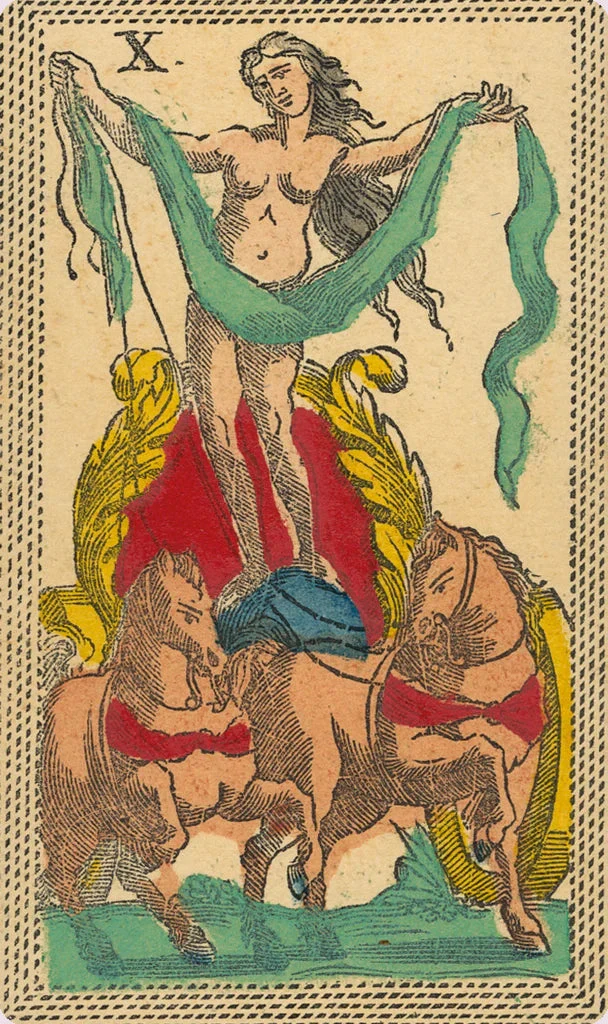
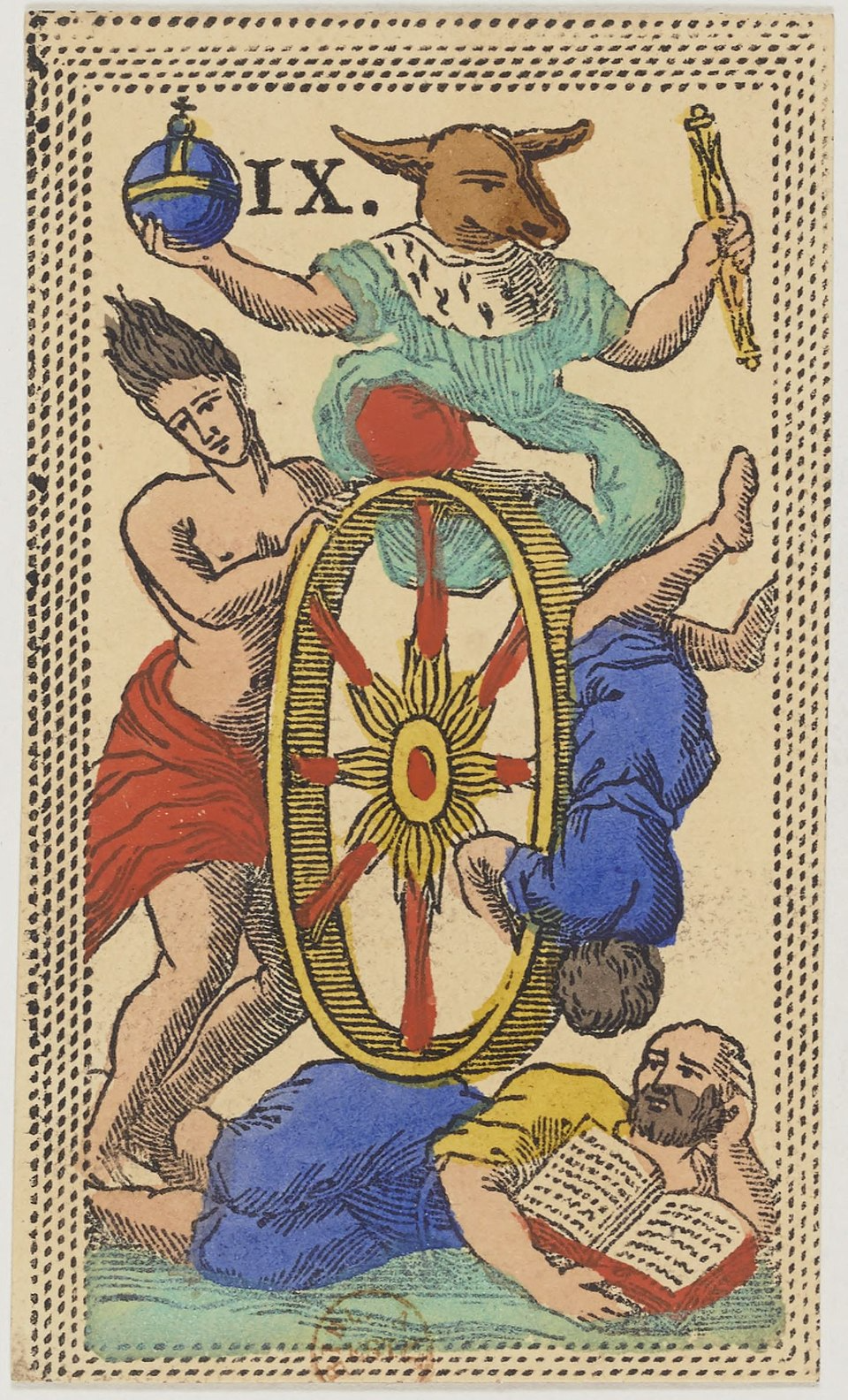
But Nanalea's story is not finished. The Wheel of Fortune turns for everyone, and the Chariot drives forward whether or not we hold the reins. One card offers the grinding mechanism of fate itself—the wheel that raises and crushes without regard for merit. The other offers the illusion of control, the belief that will and direction can master circumstance.
Now the choice passes to you. You must decide which force shaped Nanalea's descent—blind fortune or driven ambition. Neither answer is comfortable, and neither is complete.