"The Folk Origin of the Arkansas Myth"
Part Two
A Paper Read By Ted R. Worley Saturday Morning, June 19th At the [1954] Annual Meeting of the Arkansas Folklore Society
Carpetbaggers attributed the myth to the evils of slavery and the old ruling aristocracy. Professional southerners blamed damned-Yankeeism. Marion Hughes, author of "Three Years in Arkansas," wrote that "half the lies told about the state are true." William Quesenbury, Fayetteville editor and cartoonist, blamed, among others, Yankee peddlers, or, as he called them "the Connecticut nut-meg knights." When the Arkansas legislature rebuked H. L. Mencken for making Arkansas the butt of jokes, Mr. Mencken invoked a supernatural theory. "I did not make Arkansas the butt of jokes," said the sage of Baltimore: "God did it." People look at Arkansas as notorious because Arkansas is a word easily rhymed. Under this theory Utah, Maine, and Tennessee should have acquired the same amount of disreputable doggerel that attaches to Arkansas. The latest edition of the Great Soviet Encyclopedia attributes Arkansas's suffering to the oppression of the downtrodden Indians and white farmers held in semi-slavery.
The most common and the most plausible of all theories of the origin of the Arkansas myth may be called the literary-slander theory. This theory lays the blame on a plague of literary jackasses who have written evil books about Arkansas and on radio artists who make a living out of the myth. Opie Read, Thomas W. Jackson, Marion Hughes, Vance Randolph, Bob Burns, and Lum and Abner, so the explanation goes, have slandered the state to sell books and radio talent.
I do not believe that any one of these explanations — or all of them together — will adequately account for the myth.
Take the geographic explanation. Louisiana had more swamps, and Tennessee had mountains just as formidable. Texas rivers not only ran in the wrong direction; they had no water in them. California rivers ran out in the desert and dried up. Immigrants had to cross plains and deserts to get to the western states. But none of the states I have named developed a myth similar to ours. Nor was Arkansas as a young state any worse governed than "bleeding Kansas" or hectic Oklahoma. All frontiers attracted desperadoes and ruffians.
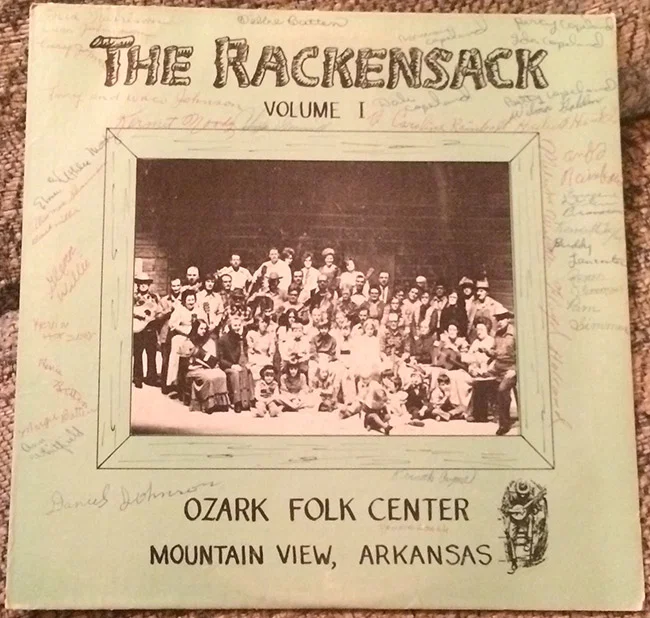
The literary-slander theory cannot be so lightly dismissed. Humorous stories about Arkansas date back to the 1830s when C. F. M. Noland of Batesville began writing his Pete Whetstone sketches. For twenty years he spun his backwoods yarns about Arkansas for the readers of the New York Spirit of the Times. The stories dealt with bear hunts, quarter races, camp-meetings, fights, frolics, and sessions of the Arkansas legislature. At the same time Thomas Bangs Thorpe and others were doing their newspaper sketches of Arkansas characters and incidents. Thorpe's "Big Bear of Arkansas," published in 1841, became the classic of the type which Bernard Devoto called "The Big Bear school of literature." Thorpe and Noland had many imitators. Arkansas became known to millions as the land of Rackensack. In 1846 William T. Porter published a batch of tales called Scenes in Arkansas. The stories were about many states but Arkansas was put in the title, and that fact is significant. The mythology of Rackensack was graced with a Rackensack song, and Rackensack was a place where mosquitoes caught chickens, and farmers fell out of their corn patches. It was a place where a county judge fined an entire county because it could not furnish enough sober men for a jury. The inhabitants of the realm were as tough as hickory barrel hoops; they shunned work like small-pox and would rather lie on a credit than tell the truth for cash. Rattlehead's Travels; or the Recollections of a Backwoodsman and Joseph G. Baldwin's The Flush Times of Alabama and Mississippi, both published in the 1850s, added to the fame of Rackensack. Baldwin's Simon Suggs was attracted to Arkansas by the unusual amount of shady litigation.