The Eighth Interlude
From the Desk of Otis Bulfinch
I wrote a wonderfully imagistic and fanciful chapter describing how Mack met Theophilus Trotter, captain of the Indrani at Madame Lulu's bordello, how they ate oysters and drank beer at Lafitte Restaurant, and how they became such bon amis and confidants that the captain invited Mack to join his crew aboard the Indrani for the long (and hopefully, bon) voyage to Japan. But then I realized that McQuary's letter from Yokohama, Japan, was sufficient, and that's why I'm including the link again, in case you missed it:
https://www.otisbulfinch.com/pk-interlude-7-notes.html
The truth is, I don't know what Mack did after he set sail from Charleston. The last newspaper account of Mack's travels in the southeast was published in The Watchman and the Southron, the newspaper of Sumter, South Carolina. The article is dated January 26, 1898.
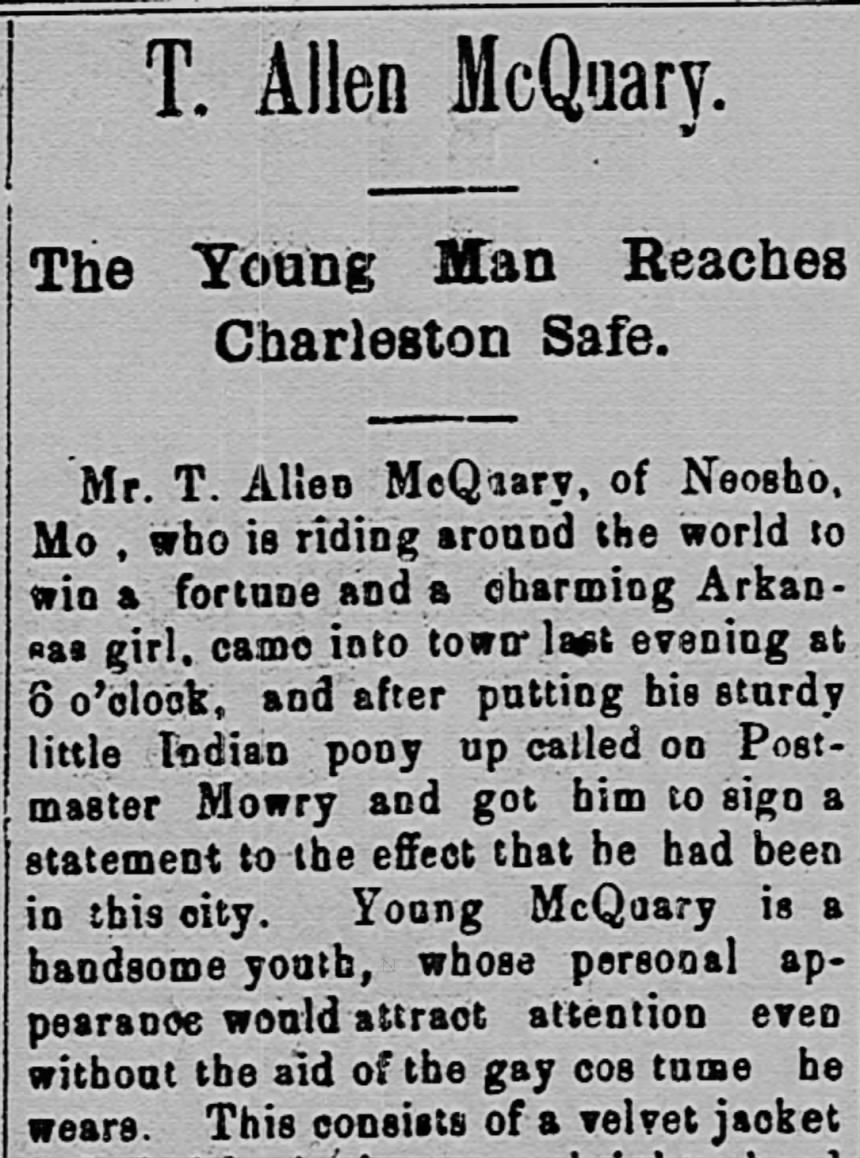
Then Mack boarded either the Orange Blossom or the Iroquois (take your pick because it seems he couldn't make up his mind which it was) for Cuba. He says they skirted around Cuba (though in other accounts he produced what he claimed was the signature of General Gomez), came ashore in Pensacola, and made his way first to Mobile and then to New Orleans. He claimed that he met Captain Trotter in Mobile but was denied a berth on the Indrani and was therefore compelled to ship aboard as a stowaway in New Orleans. There are no other newspaper accounts of Mack until his name appears in the morning edition of the Portland Oregonian on August 8, 1898.
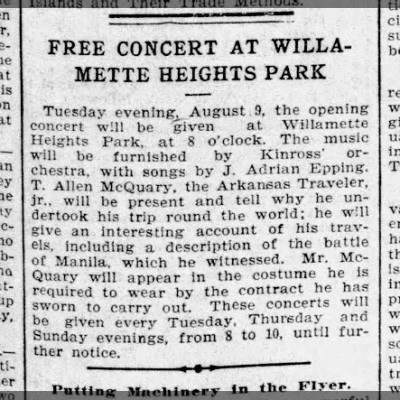
From that point on, we can more or less follow his path across the West to Missouri.
Obviously, the most important question remains: Did Mack actually voyage around the world? There are only two dates we can (kind of) count on: One is the day the Indrani set sail. On February 10th, the New Orleans Times-Democrat gave notice that the Indrani was due in port next week, so let's say, the Indrani docked in New Orleans on February 14th, Valentine's Day. Mack says he was in New Orleans for Mardi Gras, which in 1898 was February 22nd. That seems plausible, so we can safely put the departure of the Indrani sometime the following week; let's posit the 28th as a reasonable date.
On the other hand, Mack's compulsion for lying calls everything into question.
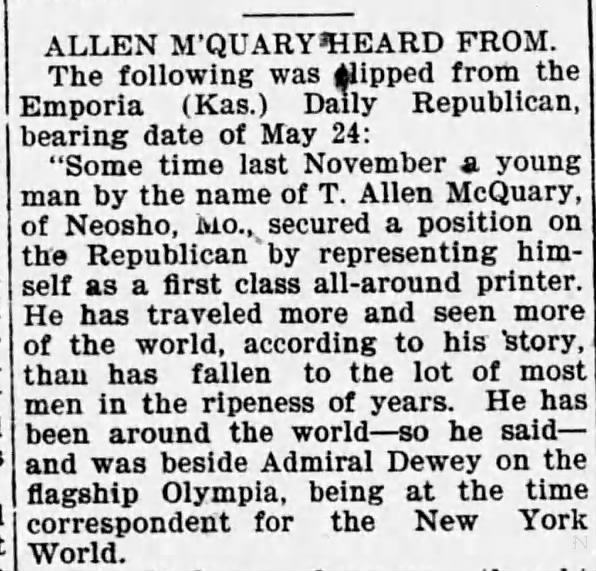
One of his lies was his claim that he stood beside Commodore Dewey at the Battle of Manila Bay, the date of which was May 1st, 1898. The article also said that Mack was serving as a correspondent for the New York World, which is utter bullshit:
I am certain that Mack liked girls, some of whom, to quote our illustrious president, were "on the younger side." After all, the premise for the whole masquerade was an underage girl: Mack said the Arkansas girl was sixteen and that he couldn't marry her without her father's approval.
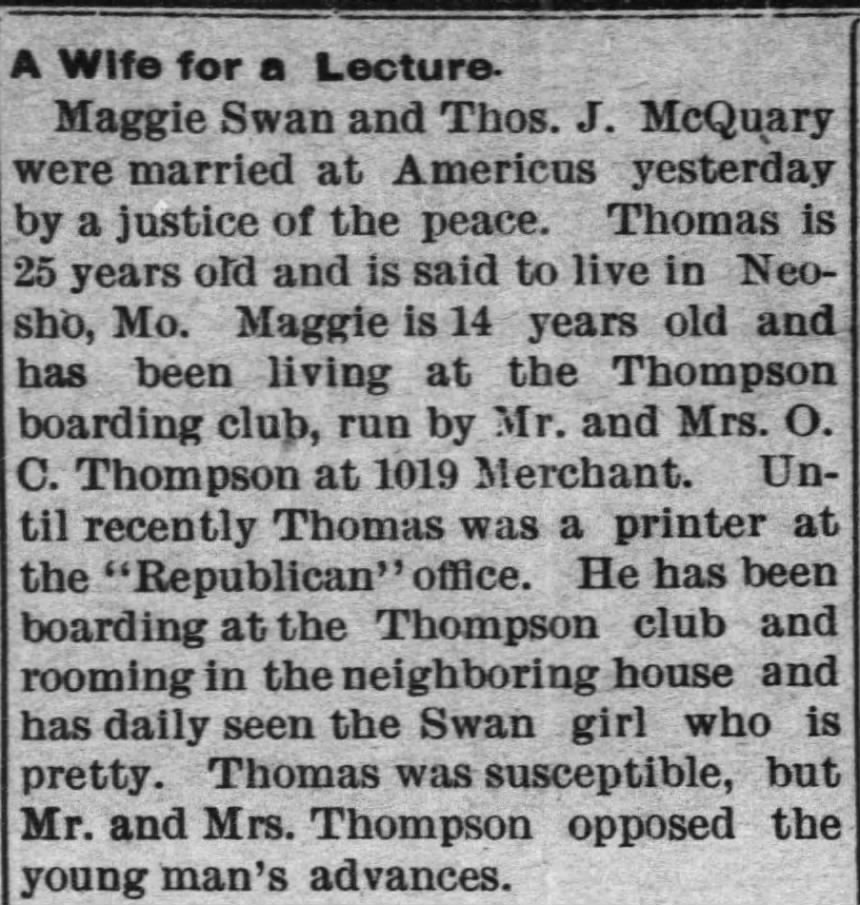
Then, when Mack made his way to Emporia, Kansas, he eloped with a girl of fourteen (some papers say 16) but lied to the judge who married them that she was eighteen:
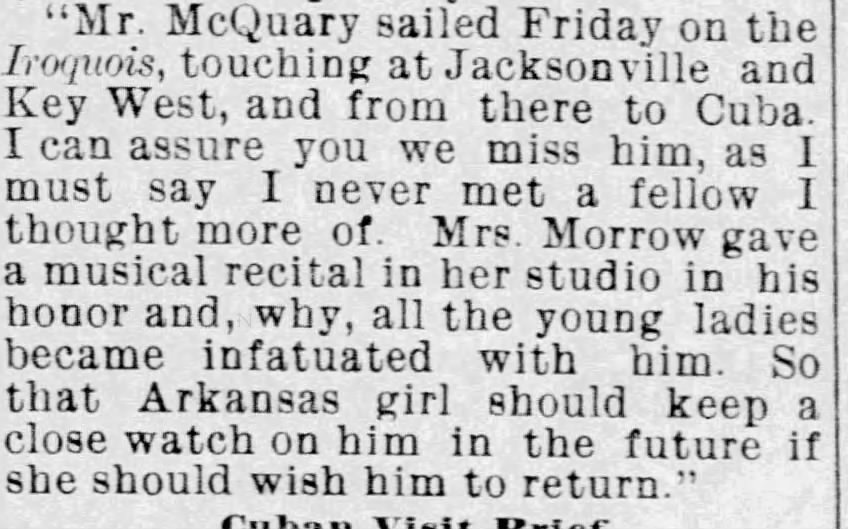
Furthermore, while the newspapers never referred to the ages of Mack's female admirers, they did emphasize the positive impression he made on girls. For example, on February 24, 1898, the Clinton, Missouri, Henry County Democrat reported the following:
An article concerning Mack's stay in Japan also reports that Mack was surrounded by admiring girls. This is from the October 29, 1898, edition of the Neosho Miner-Mechanic:
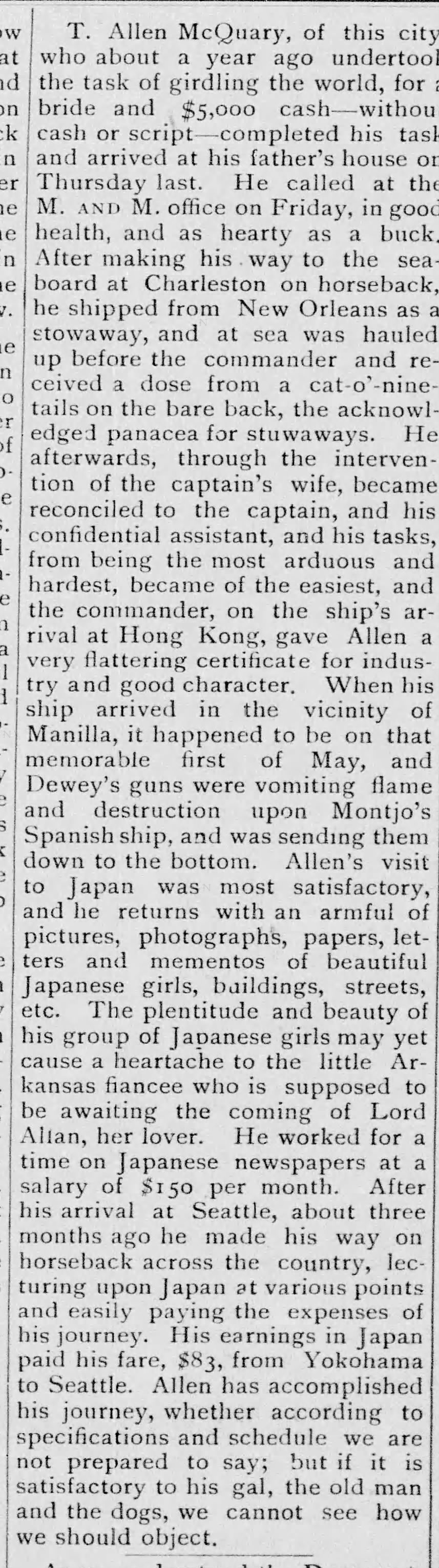
Of course, we have to be careful what conclusions we draw. The article from the Neosho Miner-Mechanic was based on whatever fictions Mack was peddling at the time, so, yeah, make of it what you will.
The article also alludes to evidence that "proved" Mack's trip: "Allen's visit to Japan was most satisfactory, and he returns with an armful of pictures, photographs, papers, letters and mementos of beautiful Japanese girls, buildings, streets, etc. The plenitude and beauty of his group of Japanese girls may yet cause a heartache to the little Arkansas fiancee who is supposed to be awaiting the coming of Lord Allan [sic], her lover."
In fact, almost every reporter who interviewed Mack referred at some point to his "book of proofs": the letters, photographs, and signatures of dignitaries, minor and major, that he collected on his trip. But how reliable were those "proofs"?
The reason I ask is because we've all but forgotten Mack's partner in this scheme: M.S. Glenn. It was probably Glenn who authored all of Mack's letters and sent them to the various newspapers. It was probably Glenn who forged the signatures that Mack exhibited. It was probably Glenn who put Mack on the deck of the Olympia, Commodore Dewey's ship, and turned Mack into a correspondent for the New York World. And it was probably Glenn who created Mack as an Ozarks Don Juan.
It was probably all Glenn.
Probably.