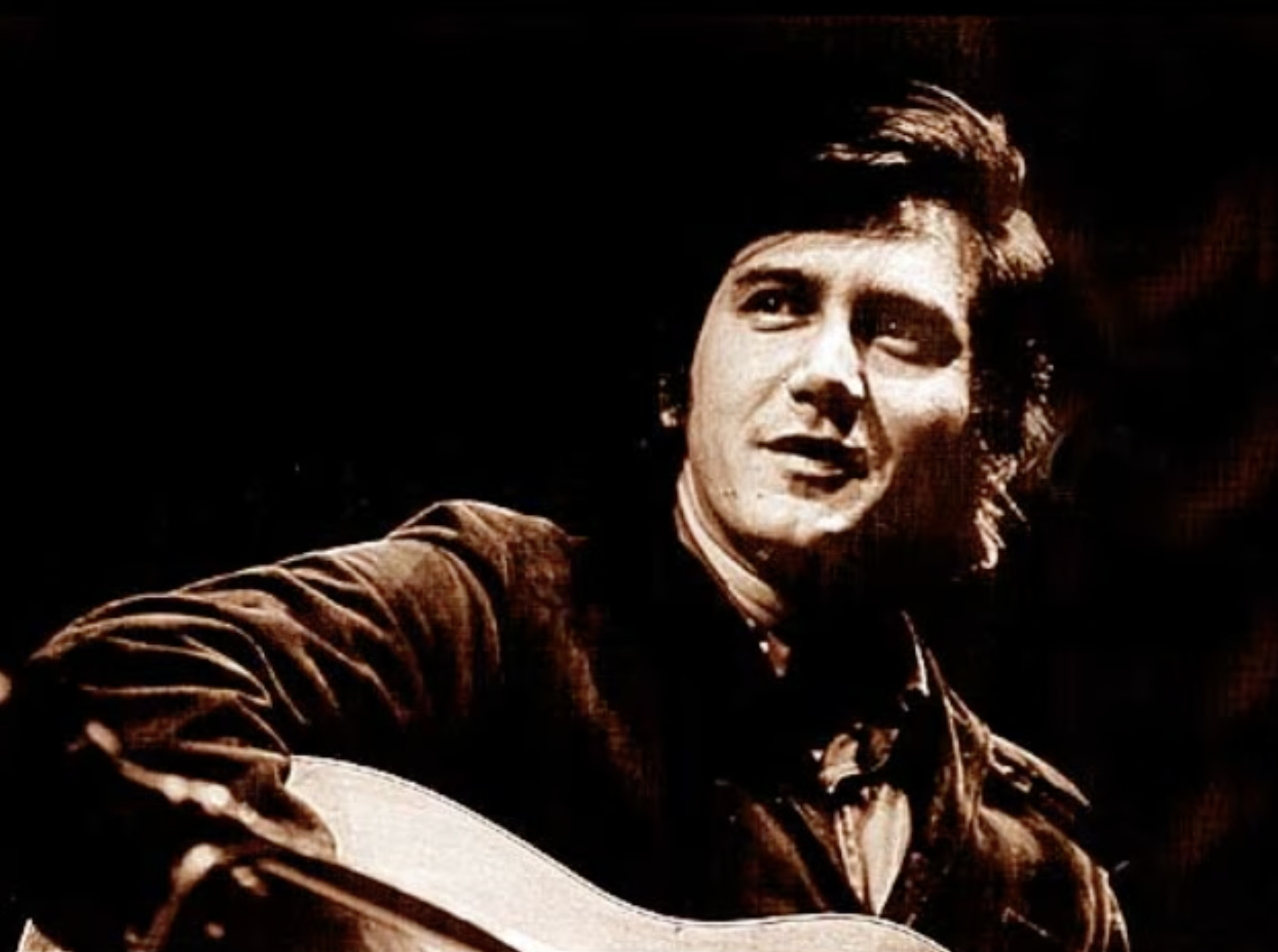
I actually did have an unrealistic purpose in mind in hitchhiking to Texas, namely, the beginning of my glorious career as a singer/songwriter/producer/etc. Throughout the 60s, Dallas had a “vibrant music scene” with its garage bands, redneck rockers, and, of course, hippie folksingers, which was the group I chose because I fancied that my song writing was superior to my singing or my playing, which I guess was in some sense true since I couldn’t sing, still can’t, and my playing was mediocre. In those days Dallas was like an amiable whore who welcomed anyone with a sliver of ambition. You might not get your rocks off, but at least you got to unzip your pants.
“It was bliss in those days to be alive, but to be young was very heaven.”
Dallas in the spring of 1968 was electric with possibilities. The days were mild and sunny, and White Rock Lake rippled and glittered beneath the happy sun. Guitars were everywhere: on picnic blankets and folding chairs and park benches and street curbs. Young men who were undoubtedly handsome beneath their beards and oily hair were singing about unicorns that missed the ark and dragons that smoked marijuana and hard rains about to fall. The girls, too, were beautiful and bright as rainbows in their scarves and beads and flowers; they sang about bows and flows of angel hair and a boy who threw something off the Tallahassee Bridge and about how good it felt to sing in the sunshine. Which is exactly what I wanted to do; I wanted to sing in the sunshine to one of the rainbow girls who would then stroke me with the same delicate affection with which she strummed her guitar. Unless you were there you can’t imagine how it felt to be young and free and high in Dallas in 1968. The sun was bright even with the tornado of Vietnam looming on that distant Asian horizon, and we, the children of Aquarius, bubbled with dreams and expectations. We were righteous in our causes and in our indignation. Anything could happen!
And then came April the Fourth, and the mood changed in an instant.
It wasn’t long after that when I worked up the nerve to take the bus to the Quiet Man on Knox Street. I carried my guitar out of an orgasm of Texas sunshine and into the calm interior of the pub. It was all brick and mahogany with sconces on the walls, and a pretty girl handed me a clipboard with a roster. I signed my name, and she smiled and said, “Good luck.” When a big fellow with a beard called my name, I unclipped the latches on my guitar case—my hands were shaking so hard I somehow managed to pinch myself—and I walked onto the stage and sang my first song in public. And though it was a long time ago, I remember the chorus and a couple of verses:
(Chorus)
I wanna be a conservative
And hang on to my tradition;
But I’m still young
And the longer I live
The more I’m changing my position:
Desegregation and Vietnam,
The United Nations and ban the bomb
The destinations I started from
Are where I’ll be tomorrow—
They killed MLK and JFK
Both of my heroes were blown away,
But those two men still lead the way
To where I’ll be tomorrow—
I wanna be a conservative
And hang on to my tradition;
But I’m still young
And the longer I live
The more I’m changing my position…
(Bridge)
What to cling to, what to let go,
Is hard to say in the current shitshow—
The people in the audience—there weren’t but a half dozen—were listening quietly, and an old lady smiled reassuringly with a “Bless his heart; he means well” look when a fellow at the back of the room shouted out, “Who do you think you’re kidding?” He was handsome enough, and he dressed cool, too. He had on a Gatsby cap and a flannel shirt and jeans, and he carried himself like the kind of guy who belongs wherever he shows up. I was so impressed that I bought a cap like his before I left Dallas.
Anyhow, he hollered at me, so I stopped and said, “Let me just finish my song, okay?”
“No! It’s not okay.”
“What’s your problem? Sing your own damn song.”
“I was singing my own damn songs before your balls dropped. But here’s a song for you: ‘I’m in Dallas, a rube from the sticks/ Singing a song and I hope it fits/ With my audience expectations/ I need their praise and adulation…’ How do you like that?”
“Wow, that was fast. But I still think you’re an asshole.”
“Of course, I am! And so are you. And so is everyone else in here. I think you’re an asshole who’s trying to ingratiate yourself to these other assholes who will forget you exist the moment you leave that stage.”
I at least had to give him credit for sincerity because he sure wasn’t trying to endear himself to anyone.
He went on, “You’re not changing your position or anything else. Hell, you couldn’t name a tradition to hang on to. You just want to be liked. You’ll be singing about Palestine next. But you don’t care about Palestine!”
“How do you know who or what I care about?” And I thought, Geez, what did I ever do to you?
“I’m going to tell you the truth about you. You will never break out of the cell of your own ego because nobody does. We are all narcissists; it’s just easier to spot in some people. Even if you repress every natural desire and spend your life feeding the hungry or tending the sick or protesting the war, you’ll only be doing it so somebody somewhere says, ‘What a good boy.’ None of us is free!”
“What about famous people with money? Don’t they get to do what they want? Aren’t they free?” I believed that if you’re famous and have money, you can do or say anything you want to because you’re above everybody else. And I always equated doing and saying what you want to with freedom, so I thought I had him, but all I really did was set him off like a roman candle.
“Oh, my God, you are a f**kin’ bumpkin dumped off the truck!”
I made a quick mental note of that remark because it sounded like a pretty good lyric.
He said, “Famous people are the most trapped-in-their-egos people of all! The higher they float, the more of their true selves they lose until they’re nothing but balloons, vapors enclosed in membranes, but, trust me, bumpkin boy, that ain’t transcendence. There is no transcendence! Nobody is free.”
I didn’t know how to respond, so I said, “Okay, I guess.”
“‘Okay, I guess?’ God help me, I’ve gotta go. I hear that old John Butler blowing his horn and see his headlamp shining in the night. May God make his face to shine upon you all.” And with that enigmatic farewell, the man turned and left.
I asked a girl in the front row, “Who was that guy?”
“You don’t know? That was Phil Ochs. He’s playing a rally tonight at SMU.”
“Never heard of him. What did he mean about the ‘John Butler’?”
“Who knows what he meant? He’s a poet, and poets say whatever they want to.”
“Aren’t you mad that he called you and everyone else an asshole?”
“If you said it, I’d be mad, but it was Phil Ochs, so, yeah, I’m okay.”
So, I was right after all! If you’re famous, you can say what you want to and get away with it. If you have fame and money, you’re even freer, but since I had neither, I was supposed to keep my mouth shut. I put away my guitar, took the bus back to the Union Mission and picked up my backpack, and hitched a ride across town to I-35. For the next six months, I wandered vaguely northward through Texas, Oklahoma, and Kansas, the perfect states to be a nobody going nowhere.
Then I got baptized in the Wakarusa River, and everything changed.