“Jack and the Beanstalk” is one of the most beloved fairy tales, having been told and retold in various print and film versions, the most popular, perhaps, being Disney’s “Mickey and the Beanstalk” released in 1947 in the wake of World War II.1 A survey of the earliest print versions reveals a thematic shift in which the original story, “Jack Spriggins and the Enchanted Bean” evolves from a fairy tale into a more linear morality tale concerned with justice, and finally, in Vance Randolph’s Ozarks version, into a reflection on telling the truth when the truth is too fantastic to be believed.2 In Randolph’s version—as told by A.L. Cline in Joplin, Mo, July, 19223—almost every familiar detail drops away, even Jack’s name, and the story undergoes a profound shift from fairy story to tall tale, in which the emphasis is put on proving the veracity of the story.4 Below is a table of comparisons between the four versions of the story available in previous posts.
| Feature | Jack Spriggins (1734) | Tabart (1807) | Jacobs (1890) | The Big Old Giant (Randolph, 1952) |
|---|---|---|---|---|
| Jack | Dirty, lazy, poor; lives with his grandmother | Indolent, extravagant; ruins his mother | Barely characterized; willing to work | Unnamed “boy” out squirrel hunting |
| What drives him | Escape from his grandmother | Restitution: the giant robbed his father | Hunger, then greed | To prove his story true |
| Mother / grandmother | Grandmother, an enchantress, Queen of Pomonkey | Widowed mother who indulged him | Poor widowed mother | Parents who laugh at him |
| The seed | A single bean, pawed from the ashes by a black cat | Colored beans traded for the cow | Magic beans traded for the cow | A blue grain of corn from a dead crow’s beak5 |
| Planting | Springs up at once, striking Jack’s nose | Mother throws them in the garden | Mother throws them out the window | Planted by the bluff, watered with stump water |
| The stalk | Forty miles high, with little towns built on its leaves | Overnight, to the clouds | Overnight, “like a big plaited ladder” | A cornstalk as big as a tree |
| At the top | Gogmagog’s castle | A barren country, and a fairy | A road to the giant’s house | A pasture of giant sheep |
| The giant | Gogmagog, a cannibal who shrinks and grows | A voracious cannibal, cruel to his wife | A cannibal with an enormous appetite | A shepherd giant; not a cannibal; never speaks |
| “Fee-fi-fo-fum” | Yes (Fee-Faw-Fum) | No | Yes | No |
| Women | The Princess (the enchanted black cat) and the imprisoned Ladies; no wife | The giant’s kind wife; the fairy | The ogre’s wife, who helps Jack | None |
| What Jack gains | Magic box and wishing ring, given to him; the Princess | Hen, money bags, harp | Gold, hen, harp | The sheep bell6 |
| The giant’s end | Killed by the sight of the Princess turned basilisk | Falls when Jack chops the stalk | Falls when Jack chops the stalk | Falls when the cornstalk breaks |
| Ending | Jack stays in the castle in the air | Jack begs his mother’s forgiveness | Jack marries a princess | Giant buried in secret; quilts from his britches |
| The tale’s claim to truth | Debunks itself: “the Chit-Chat of an old Nurse” | A moral lesson | None | Proof remains: the bell lies there “to this day” |
Much could be written by way of analysis on these points of comparison. For example, the name of the giant, Gogmagog, in “Jack Spriggins and the Enchanted Bean” situates him in the tradition of biblical mythology: Goliath, Leviathan, the Devil, and even the Serpent in the Garden; all have linguistic and thematic associations with the Gog and Magog of Ezekiel and the Book of Revelation.7 A principal difference between the giant in “Jack Spriggins” and the biblical monsters/giants is that none of the biblical monsters is explicitly cannibalistic until medieval illustrations represented the sea monster Leviathan as the “Hellmouth.”
In spite of this important difference and in spite of the magical and fantastical elements of the fairy tale, I think Gogmagog of “Jack Spriggins” is a conflation of these various biblical monsters, and his death at the hands of a much smaller hero inevitably recalls David’s killing of Goliath.8
Subsequent representations of the giant shift in the later tales lose the biblical accretions and focus almost entirely on his colossal and cannibalistic appetite. In Tabart’s version, the unnamed giant took advantage of Jack’s father, who was, according to an old woman/fairy a very good man who had taken pity on the giant only to be killed by him. The giant then stole the father’s riches and left Jack and his mother destitute. Nevertheless, this injustice was not Jack’s motivation in climbing the beanstalk. He did so to “seek his fortune.” Only later did he learn who the giant was and what he did. The giant’s wickedness is emphasized when Jack finds human victims kept in a dungeon to satisfy the giant’s appetite. Tabart carries forward the theme of inordinate appetite and more important, turns Jack’s quest into a bid for justice. The giant’s crimes are both universal and particular—universal in his cannibalism and particular in his murder of Jack’s father.
In Joseph Jacobs’ version of the tale, the giant is once again described in terms of his excessive appetite. In one passage, he has three calves hanging from his belt for his breakfast, and in another, he eats three broiled oxen. Jacobs, however, removes any motivation for Jack climbing the beanstalk—he simply sees the stalk through his window and begins to climb it—and the giant is not guilty of any particular crimes against Jack. As the giant’s wife says, Jack is a rogue who steals from the giant for no other reason than Jack is poor and the giant wicked.
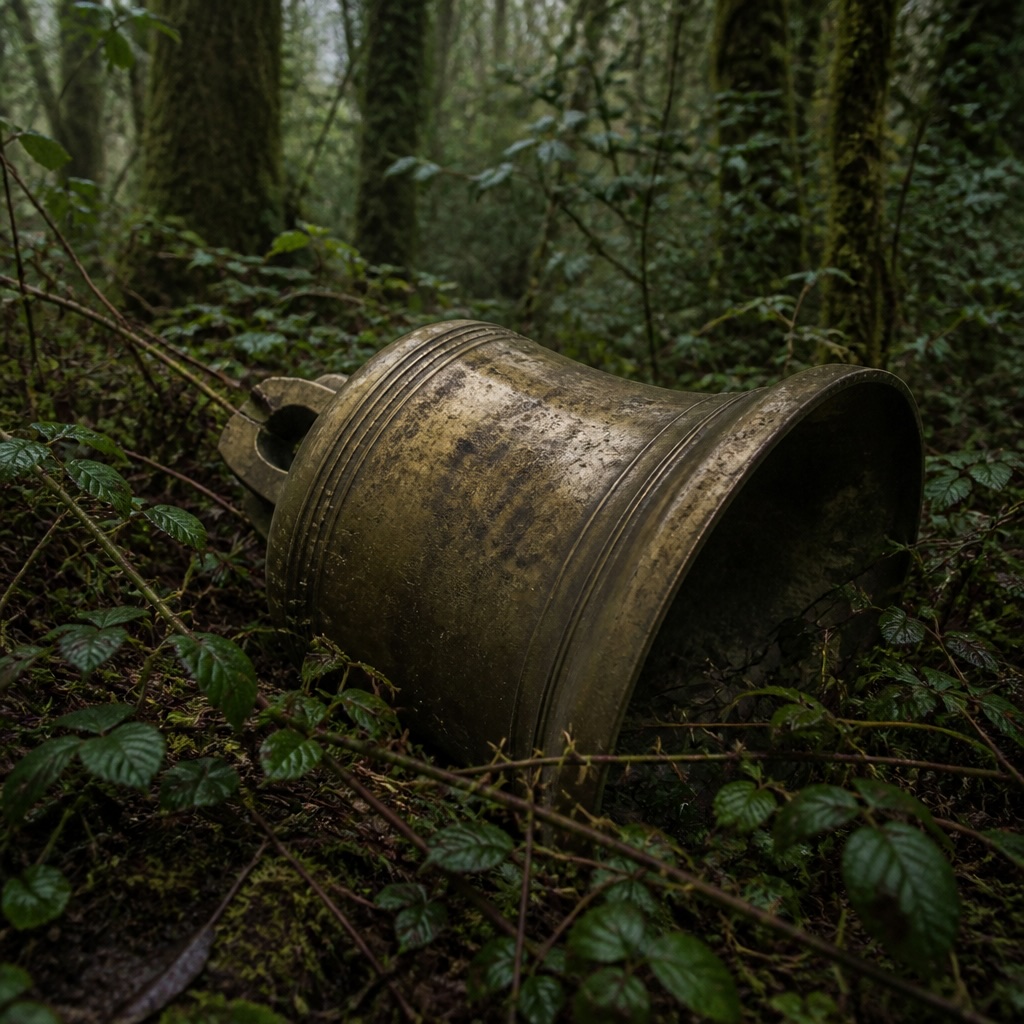
Randolph’s Ozarks folktale is radically different from the previous versions. Most obviously, many of the fairy tale elements of “Jack Spriggins” are absent. Obviously, there is still a magic seed and a towering plant and a giant in the sky, but the fairies, dungeons, random transformations, and cannibalism are gone. In fact, the giant’s appetite is not mentioned at all in Randolph’s version, and the giant never utters the terrifying “Fee, fie, fo, fum; I smell the blood of an Englishman.” Moreover, so far as the tale reveals, the giant wasn’t guilty of any injustices—either universal or particular; he was a shepherd who was minding his own business at the top of a magic cornstalk. The giant is neither a monster in the line of Goliath or Leviathan, nor is he the symbol of unrestrained appetite we find in Tabart or Jacobs. On the contrary, his motive in pursuing Jack seems only to be the recovery of his property. In another change, the protagonist, the boy, is never even given a name. Most important, the boy is not seeking his fortune or escaping his grandmother or vying for justice. He climbs the cornstalk for one reason: to prove to his parents, who laughed at his story and then refused to follow him to the cornstalk, that he is telling the truth. In Randolph’s telling, the fairy tale becomes a reflection on the tradition of the tall tale. “The Big Old Giant” marks a change in index, if you will, to a genre that is more Ozarkian than English. The fairy tale elements retained in Randolph’s version make it unbelievable, of course, but that’s precisely what the story is about: believing the unbelievable. According to the story, somewhere in the woods is a huge brass bell—solid and incontrovertible evidence of the veracity of the story—but evidence no one in the audience believes exists, not even children. No one who listens to “The Big Old Giant” is going to mount a search party for the bell. The bell is a proof that is no proof and a joke about its implausibility. Both the storyteller and his audience know what is going on—they are both aware of the implicit irony of the story—and this shared irony bespeaks a sophistication in Randolph, his informant, and his intended audience. The preacher’s reference to the Devil could associate the bell with the giant Gogmagog in “Jack Spriggins,” but in my opinion, such an association would be stretching the interpretation too far. If anything, the introduction of the preacher and his wariness concerning the bell is an ironic association of the utter implausibility of the “giant” with the fantastical elements of Scripture.
To conclude, the stories I find most germane to Randolph’s version are the adventures of Odysseus in Scheria. First, the context: Odysseus has washed ashore in the land of the Phaeacians where he possesses nothing but his reputation. After he asserts his identity, “I am Odysseus,” he declares that “I am known throughout the world for my tricks [doloi].” With this declaration, Odysseus has moved from being “no one” to being the “famous Odysseus,” whose fame arises from his tricks, the most famous being, of course, the Trojan Horse. Every story Odysseus tells after that is potentially one more example of a dolos. What then accounts for the Phaeacians’ reception of the stories as “true”? The fact that Odysseus tells the stories so well [kata moira], that is correctly, orderly, “according to Fate,” as the words kata moira suggest, convinces his audience that he is doing more than merely “spinning yarns,” that he is indeed telling the truth, or at the very least, entertaining them with stories that contain a truth.
Perhaps the most popular of Odysseus’s stories in this vein is his encounter with Polyphemus, a tale archetypically related to the Jack and the Giant stories. Once again we have a monstrous cannibal and a small protagonist. We have similar ambiguous motives on the part of the protagonist: Odysseus and his men sail to the island of Cyclopes out of curiosity, they enter the cave because they are hungry, and they remain in the cave because Odysseus desires a “guest gift,” a xenia commensurate with his honor. Polyphemus’s “guest gift” is eating a couple of Odysseus’s men, whereupon Odysseus begins plotting an escape. In the meantime, Polyphemus—whose name means something like “much speaking”—asks Odysseus his name, and in perhaps the most famous dolos in the poem, Odysseus says, “Ou tis,” that is, “Nobody.” When Odysseus and his men blind Polyphemus, he begins bellowing in pain. The neighboring Cyclopes reply, “Surely, no one is driving off your sheep! Surely, no one is trying to kill you now by force or fraud!” However, Greek grammar requires that the neighboring Cyclopes use the words me tis, which also means “no one” rather than ou tis. In this wonderful bit of wordplay, the words me and tis are combined into the single word metis, which means “cunning,” which of course, is Odysseus’s preeminent attribute, the quality that enables his tricks, his doloi. In response to the other Cyclopes, Polyphemus hollers back, “Nobody [outis] is killing me now by force or fraud,” and they respond, “Well, then if nobody [metis] is trying to overpower you, then Zeus must have sent a plague on you, and you should pray to your father, Poseidon.” The immediate consequence of Odysseus’s trick is that the other Cyclopes don’t seek to avenge the blinding of Polyphemus, and Odysseus says, “They lumbered off, but laughter filled my heart to think how nobody’s name—my great cunning stroke—had duped them one and all” [Fagles’ translation].
Of course, the story doesn’t end there. After the Greeks reach the ships, Odysseus can’t restrain his desire for honor, and he cries out, “If anyone asks who blinded you, tell them Odysseus!” Polyphemus hurls an enormous boulder and nearly destroys Odysseus’s ship, but his second throw drives Odysseus and his men out to sea where they are able to escape. In a final twist, Odysseus’s reckless taunt gives Polyphemus the information, i.e., the name “Odysseus,” that he needs when he prays to Poseidon (which, incidentally, is the advice the Cyclops received from his neighbors). Polyphemus’s prayer is the origin of the curse that kept Odysseus away from Ithaca for ten years and eventually cost the lives of all his crew.
I would suggest that this story of the Cyclops as told to the Phaeacians serves as a paradigm for understanding the social context in which tall tales are told, and this paradigm is diachronic and diatopic. Consequently, Ozarkers interacting with outsiders found themselves psychologically, or more precisely, ontologically, in the position of Odysseus, as “nobodies” whose principal means of self-affirmation is their ability to tell stories with enough plausibility to trick or persuade their audience.
For the most part, the people who settled the Ozarks were contented with plentiful game, sweet and easily accessible water, a garden patch, homespun clothes, and the religion of their forefathers. Their identity was something given, an unreflecting, intuitive sense of self enhanced by the beauty, bounty, and isolation of the Ozarks. However, when these same folks encountered an outsider, they weren’t simply dealing with another person, they were encountering the entire world the outsider (potentially) represented, a world of superior education, sophistication, wealth, and conventional mores. As a result, the Ozarker vis-a-vis the Outsider is rather like Odysseus in the cave—a Nobody—trying to assess and address the overwhelming presence of a giant. This analogy may also extend to the boy in “The Big Old Giant” whose claim about the cornstalk is ridiculed by his parents, a ridicule that diminishes his sense of self and impels him to climb the stalk. He resolves to cut the bell and push it from the meadow in order to have evidence to prove his claim. That is, the boy wants to substantiate his being by being believed. For Odysseus, the boy, and the poor, rural Ozarker, the initial and inevitable effect of confronting a giant is the diminution of their sense of self, an ontological deprivation. One socially acceptable not to mention legal way Ozarkers sought to recover their ontology was through telling stories, tall tales—which is why they “always lie to strangers.” In telling his tale, the Ozarks storyteller employed his or her own metis, that is, the cunning and craft required to tell the story well. If the outsider expresses any indication of belief in the story, even if it’s nothing more than a furrowed brow, the storyteller has “won.” The playing field has been leveled, so to speak, and the fact that the duped outsider remains oblivious to the storyteller’s victory only serves to raise the status of the storyteller in the eyes of the only audience that really matters, other Ozarkers.
Notes
-
In “Mickey and the Beanstalk” the shadow of the giant falls across Happy Valley in the same way the shadow of Nazism was represented as falling over Europe:

-
Vance Randolph’s Ozarks version of “Jack and the Beanstalk” is entitled “The Big Old Giant” and was one of the tales in Who Blowed Up the Church House? published by Columbia University Press in 1952. ↩︎
-
The full annotation by Randolph and Herbert Halpert is on pages 193–94 of Church House:
Told by A. L. Cline, Joplin, Mo., July, 1922. He heard the tale as a child in Benton county, Ark., about 1895, and said that he had never seen it in print. Charles Morrow Wilson (Backwoods America, 1934, pp. 56–58) reports a related “Jack and the Beanstalk” yarn from “an isolated village in the Arkansas hills.” Bob Wyrick, Eureka Springs, Ark., May, 1951, told me a similar tale, in which Jack kills the giant by a trick, but it is the giant’s wife who pursues him and falls to her death. (V.R.)
Despite the cornstalk, which here has replaced the more familiar “beanstalk,” this tale is obviously a version of “Jack and the Beanstalk.” Chase, Jack Tales, pp. 31–39, has a composite text; in my notes, which appear on pp. 190–91 of the same book, I have discussed the American, British, and Irish texts of this form of Type 328, “The Boy Steals the Giant’s Treasure.” See also Wilson’s Ozark version; a New England text, Johnson, What They Say in New England, pp. 205–7; and one from the Antilles, Parsons, Antilles, III, 288. (H.H.)
-
Of course, Randolph could have chosen other Ozarks versions of the Jack story. Charles Morrow Wilson includes one such version in his book Backwoods America. Wilson’s version closely follows the Appalachian versions cited in footnote 6 below even to the inclusion of the bells tied to the bed cords. ↩︎
-
Incidentally, the grain of corn in Randolph’s version comes from the Tom Thumb tradition. In Tom Thumbe, His Life and Death, a 1630 verse chapbook, we find the following reference:
Now by a Raven of great strength
away he thence was borne,
And carried in the carrions beake,
even like a graine of Corne,
Unto a Giants Castle top,
in which he let him fall…https://d.lib.rochester.edu/camelot/text/the-life-and-death-of-tom-thumb-1630.html
A 19th century retelling of this episode modifies the episode thus:
“Tom’s father made him a whip of barley-straw to drive the cattle with, and one day in the field Tom slipped into a deep furrow. A raven flying over picked him up with a grain of corn, and flew with him to the top of the giant’s castle by the seaside, where he left him.”
The History of Tom Thumb and Other Stories Author unknown. https://www.gutenberg.org/files/11092/11092-h/11092-h.htm
The Ozarks version modifies the grain of corn yet again to reflect the staple crop of the region. ↩︎
-
There are two Appalachian versions worth considering in light of my thesis: The first was recorded by Isabel Gordon Carter and published in the July, 1925, edition of the Journal of American Folklore. You may read Carter’s version here: https://archive.org/details/sim_journal-of-american-folklore_july-september-1925_38_149/page/366/mode/2up.
The second version, “Jack and the Bean Tree,” was recorded by Richard Chase and may be accessed at http://archive.org/details/jacktales0000chas/page/36/mode/2up. (Chase is mentioned in Halpert’s annotation to “Big Old Giant” in Church House.) The Appalachian tales essentially retell the earlier versions of “Jack and the Beanstalk” but in Appalachian dialect. There is one interesting addition: In the Appalachian versions, Jack hides under the giant’s bed where he discovers bells that hang from the mattress webbing. When Jack steals the bells, their tinkling sound alerts the giant to Jack’s presence. This may be the origin of the bell on the sheep’s neck in Randolph’s version, but of course, that’s purely speculative. ↩︎
-
In the context of the Old Testament, Goliath is more than a giant. His armor and weapons are made of bronze or nechoset in Hebrew. Similarly, the word in Hebrew for serpent is nacash. Because both words share the exact same root consonantal letters (N-Ch-Sh), ancient listeners heard a deliberate, rhythmic word play that turned Goliath into a bipedal reiteration of the Serpent. When David slays Goliath with a stone in the forehead and then cuts off his head, he is partially fulfilling the prophecy in Genesis wherein the seed of Adam crushes the head of the Serpent.
Furthermore, the Serpent, Goliath, and Gog and Magog are all associated mythologically, theologically, and linguistically with Leviathan: Like Goliath in his armor, Leviathan is described as clad in scales; Isaiah 27:1 explicitly associates Leviathan with the Serpent by calling Leviathan “the gliding serpent” (nachash bariach); and Revelation 20:1-3 combines multiple images thus: “Then I saw an angel coming down from heaven with the key to the bottomless pit and a heavy chain in his hand. He seized the dragon—that old serpent, who is the devil, Satan—and bound him in chains for a thousand years. The angel threw him into the bottomless pit, which he then shut and locked so Satan could not deceive the nations anymore until the thousand years were finished. Afterward he must be released for a little while.” And like Goliath, Leviathan is slain by having each of his heads crushed: Psalm 74: 12-14 says, “But God has been my king from ancient times, performing acts of deliverance on the earth. You destroyed the sea by your strength; you shattered the heads of the sea monster in the water. You crushed the heads of Leviathan; you fed him to the people who live along the coast.” So, while Leviathan is an amalgam of monsters, it is in his iteration as a Giant that he enters the Jack Spriggins story. ↩︎
-
For what it’s worth, in my opinion, a giant can be anyone or anything that makes us feel small: parents, outsiders, institutions, power structures, politicians, celebrities, death, the list goes on and on. ↩︎