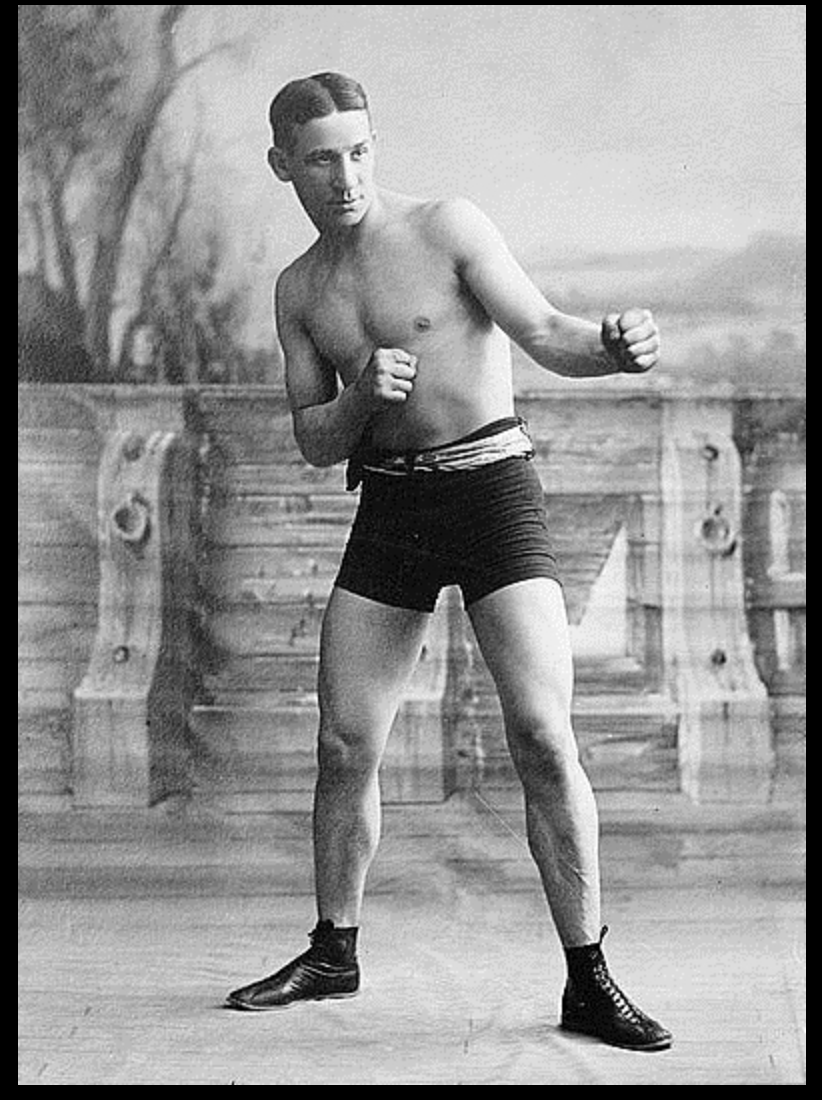
The little town of Monett, Mo., is full of people who tell tall stories—“folks that stretch the blanket,” to use the local idiom. I had not been in the place 10 minutes before a big-mouthed Rotarian assured me that Monett is the greatest strawberry market in the world. This is probably an exaggeration, but they did ship 92 carloads one day last Summer, which is a lot of strawberries.
Monett is credited with a population of about 4,000, but a civic booster explained that the town is considerably larger, “if the truth was knowed.” It appears that Monett “sets right on the county line, so that the whole north end bulges over into Lawrence County. There’s more’n a thousand people over there that we don’t git no credit for.”
The Monett High School and Junior College are housed in the same building, in a little grove of maple trees. The people of Monett are very proud of this plant, and a little given to boasting about it. Jay B. Iden, of the Monett Times, always claimed that the courses offered there are superior to the corresponding courses at the University of Missouri.
The last time I visited Monett I asked a barber what was going on in town. He advised me to go down to the High School and hear Tommy Ryan lecture on the evils of liquor and tobacco. “Tommy Ryan,” said the barber, “is the former middleweight champion of the world.”
I nodded, but it seemed a bit strange to me. I had seen Tommy Ryan only a few weeks before in Culver City, Calif., where he was running a little restaurant near the M-G-M studios. Also, while it is true that many fighters delivered temperance lectures in their declining years, I couldn’t quite picture Tommy Ryan doing it.
A press of other matters occupied me all day, but I resolved to look into this Ryan business next morning.
While we sat at dinner that night, the news came that the great Tommy Ryan had died suddenly, after putting on his strong-man act at the Monett High School.
Shouting his denunciations of alcohol and nicotine, pointing his speech with anecdotes from his career in the ring, the lecturer had dragged out a big iron dumb-bell which he said weighed 200 pounds.
“I’ll pay $25 in cash,” said he, “to any cigarette-smokin’ feller who can lift that weight over his head. No boy who poisons himself with cigarettes can do it!”
He looked around defiantly, but no cigarette-smokers came forward to claim the reward.
“I’m eighty-five years old,” the great fighter continued, “but I can lift that there weight with one hand. And the reason is that I never drunk no whiskey, an’ I never use terbacker in any form!”
With that he picked up the big dumb-bell and slowly raised it above his head, first with both hands and then with one. As the boys and girls applauded, he clutched at his chest with a grimace of pain, and trembled visibly. Thereupon the students clapped louder than ever, although many of them suspected that this was only a part of the act. Boys and girls are getting mighty smart nowadays, even in such places as Monett.
A local boy named Martin, a senior in the High School, was persuaded to hold a potato while the lecturer sliced it with long strokes of a sword. This, said he, showed how abstinence from liquor and tobacco steadies a man’s nerves. Young Martin’s hand was cut slightly in this demonstration, but his nerves seemed to be all right. Much steadier than the prize-fighter’s, anyhow.
“Don’t never cuss,” said the latter to the audience, apropos of nothing in particular. “Cussin’ won’t make a man strong. Nor it won’t make him smart, neither.”
Some schoolmarm giggled a little, and the old fellow noticed it.
“An’ don’t worry about my grammar,” he said sharply. “I never got only about three months of schoolin’ in my whole life. But schoolin’ ain’t everything, and don’t you forget it.”
His feats of physical prowess done, the veteran told some humorous stories of his adventures in the ring. In mentioning other famous pugilists he always used their given names, as if he had known them intimately. A few of these old-timers, he admitted, trained on beer and spent much of their time in saloons. But the great Tommy Ryan seldom went into such places, preferring to spend his evenings at prayer-meetings and the like.
And so the exponent of clean living rambled on, apparently speaking with some difficulty. He finally brought his lecture to a close and drove slowly back to the Broadway Hotel. At the top of the stairway he staggered and clutched at his chest, just as he had during the weight-lifting exhibition. A few minutes later he was dead. Dr. Frank T. Kerr said that the death was due to a heart attack.
I went down to the Calloway Funeral Home and looked at the body. It was that of a big, burly old man. But it certainly was not the body of Tommy Ryan, sometimes middleweight champion of the world, whom I had met in California.
Some local gamblers told me that the dead man’s real name was Joseph Juvenal. They thought he had been raised on a farm in Indiana. Nobody knew much about his early life, but most people doubted that he had ever been a fighter.
For the past 10 or 12 years Juvenal had wandered through the Middle West, posing as Tommy Ryan, preaching against liquor and tobacco wherever he could get an audience. He usually charged 10c admission to his “show,” but gave many free lectures and demonstrations. He drove a showy Cadillac car, and always seemed to have plenty of money. Many church officials and school men, particularly in the smaller towns, were in hearty sympathy with his anti-drinking and anti-smoking crusade.
The Kansas City Times, which I read next morning at the breakfast table, stated that “Juvenal called himself Tommy Ryan, ex-middleweight champion of the world,” and described him as “a Kansas evangelist, who for more than a decade has been confused with the Tommy Ryan that the boxing world knew so well. On the stage school authorities found a 65-pound weight, the same size as the 200-pound weight used by ‘Ryan’ in his exhibition. They did not attach any significance to this fact.”
The Times reporter may have been right about the school authorities, but less academic minds attached a great deal of importance to the fact, and it was common talk in Monett that Juvenal’s weight-lifting had all been faked with the 65-pound dumb-bell. The genuine 200-pound weight, it was said, had been provided only for the confusion of cigarette-smokers who tried to win the $25 reward. One local sportsman assured me that old Juvenal couldn’t even drag the big weight up a four-foot flight of steps, and always hired two husky boys to carry it up on the stage for him.
We talked about these things that night, in a pleasant little house on North Central Street. Suddenly one of the ladies began to laugh, and kept it up until the tears ran down her cheeks.
“It seems so funny,” she gasped, “that a preacher should lie, and cheat, and finally kill himself, just to prove that cigarettes and whiskey are bad for one’s health!”
Thereupon the lady’s common-law husband produced some excellent whiskey, which we drank. We smoked some more cigarettes, too. And every one of us laughed a little, but I am not sure that we were all laughing at the same thing, or for the same reason.