Historical Notes: Chapter Fifteen
Tracking McQuary's Journey: Missouri to Charleston
The newspaper clippings below document T. Allen McQuary's actual journey as the Purple Knight of the Ozarks from his departure in Missouri through his arrival in Charleston, South Carolina—a serpentine route through the American heartland that Otis Bulfinch tracked with brass thumbtacks on his office wall.
Missouri: The Journey Begins
McQuary departed Missouri in the summer of 1897, heading north and east toward St. Louis before crossing into Illinois.
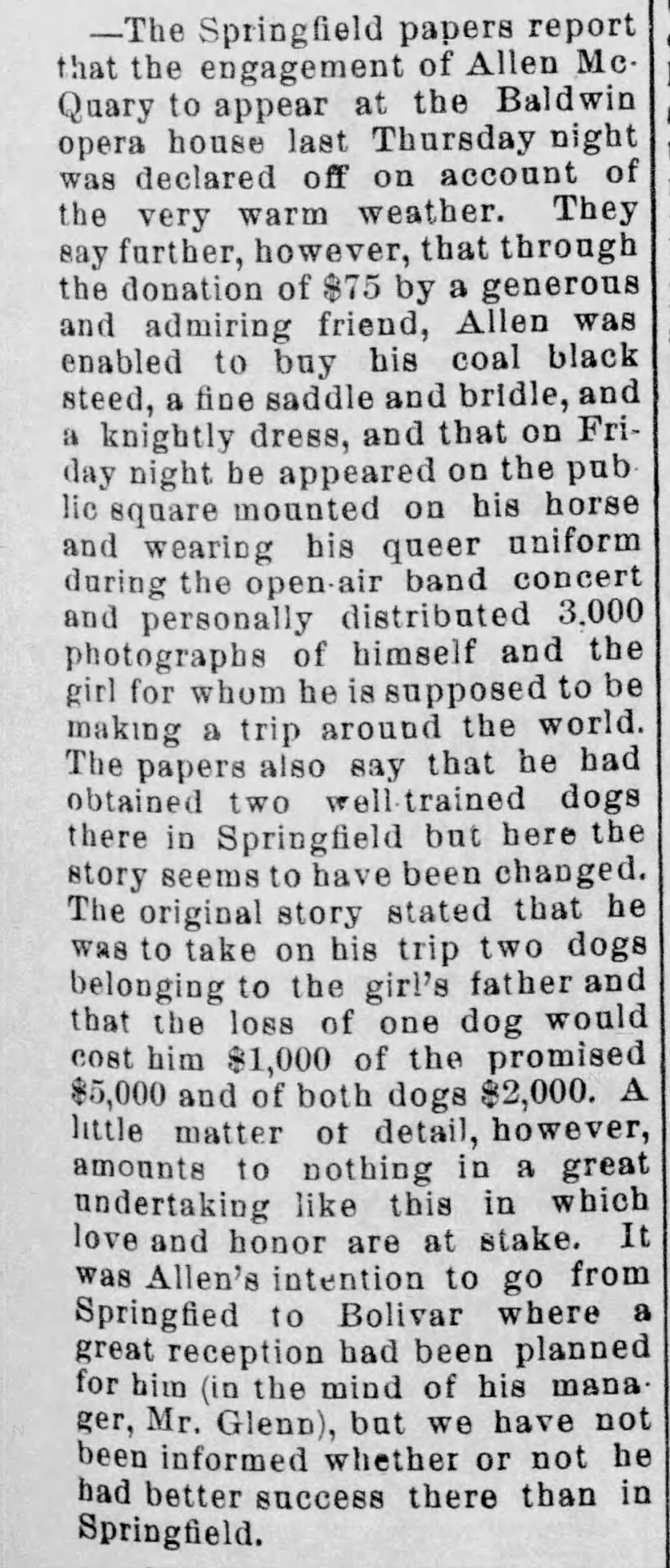
Neosho, Missouri — The Neosho Times, July 22, 1897
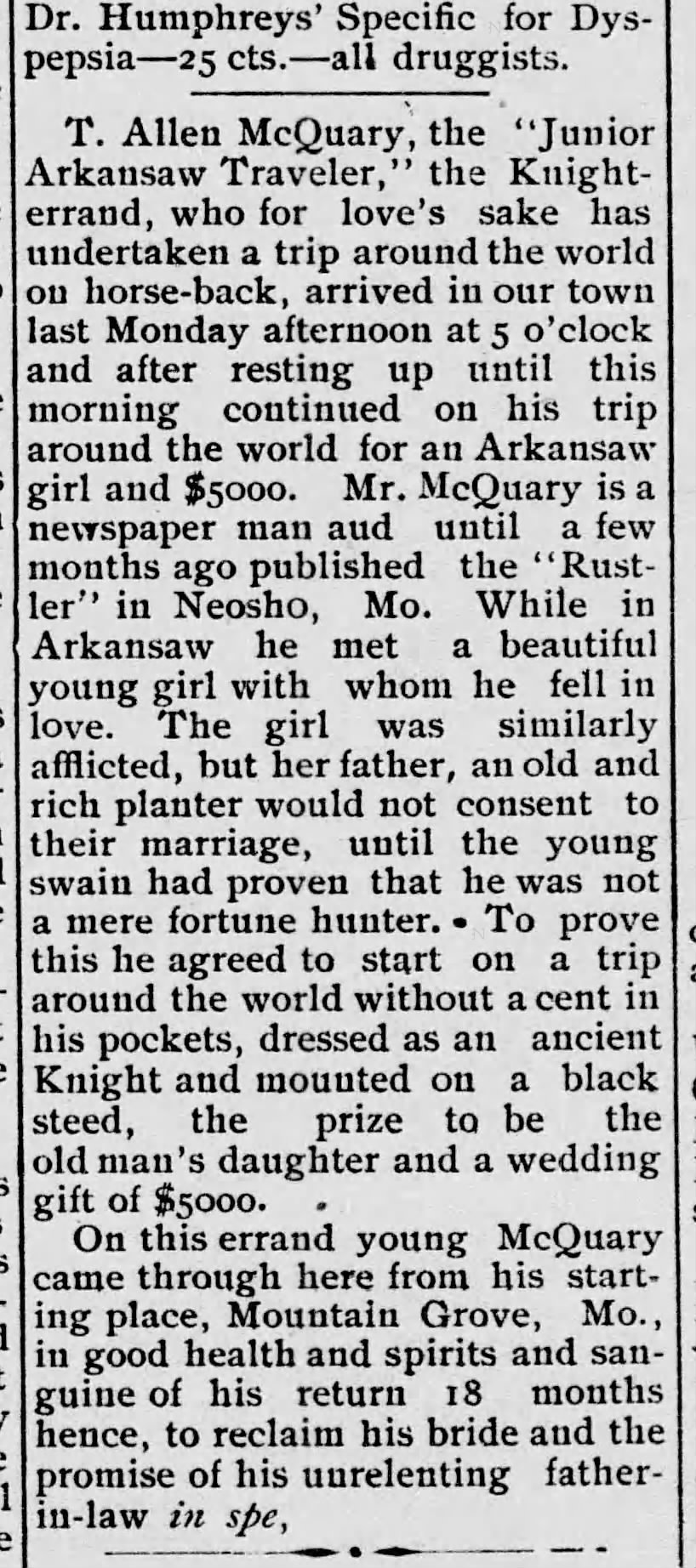
Herrmann, Missouri — The Advertiser-Courier, August 18, 1897
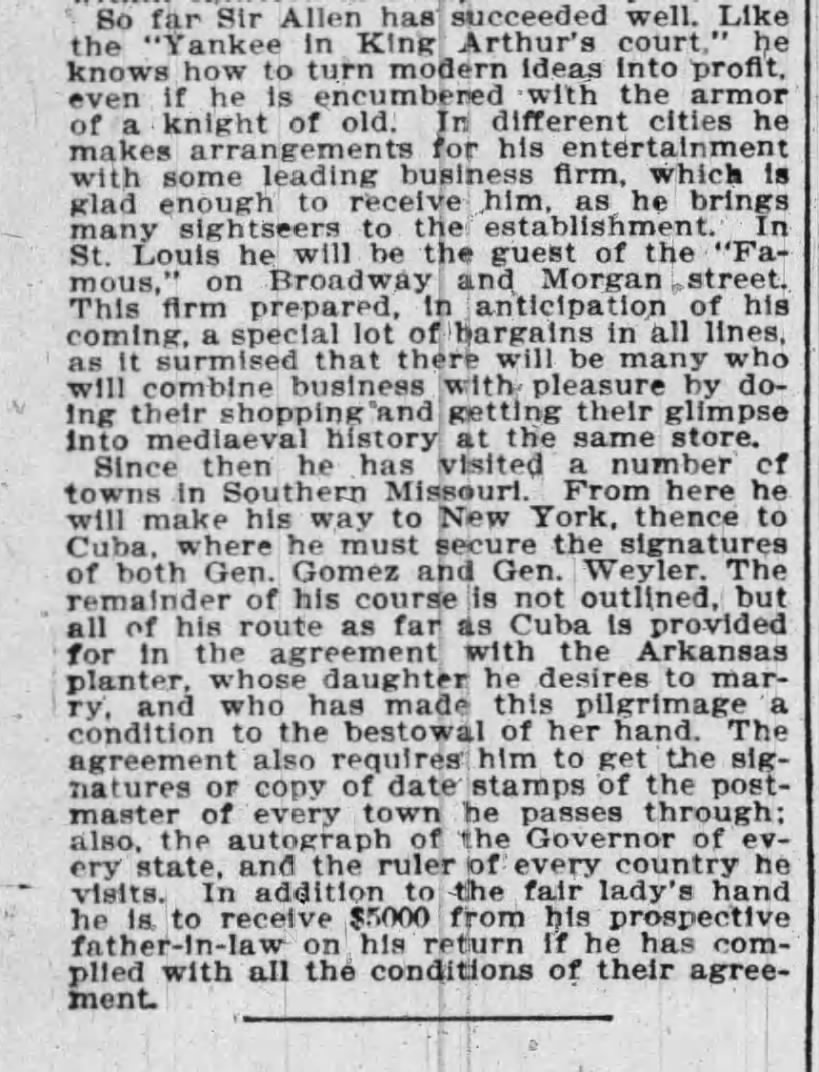
St. Louis, Missouri — St. Louis Globe-Democrat, August 22, 1897
Illinois: Hero and Outcast
In Decatur, Illinois, McQuary was received like a conquering hero. In Bement, he was despised and rejected—he shook the mud from his purple boots and moved on.

Champaign, Illinois — Champaign County Herald, September 29, 1897
Indiana: Through the Heartland
Subdued but determined, McQuary crossed into Indiana, making his way through Rushville, Richmond, and Cambridge City.

Rushville, Indiana — The Rushville Republican, October 12, 1897
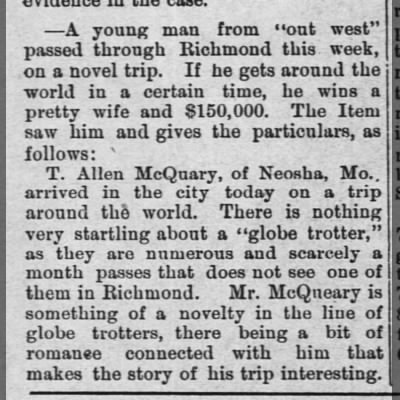
Hagerstown, Indiana — Hagerstown Exponent, October 20, 1897
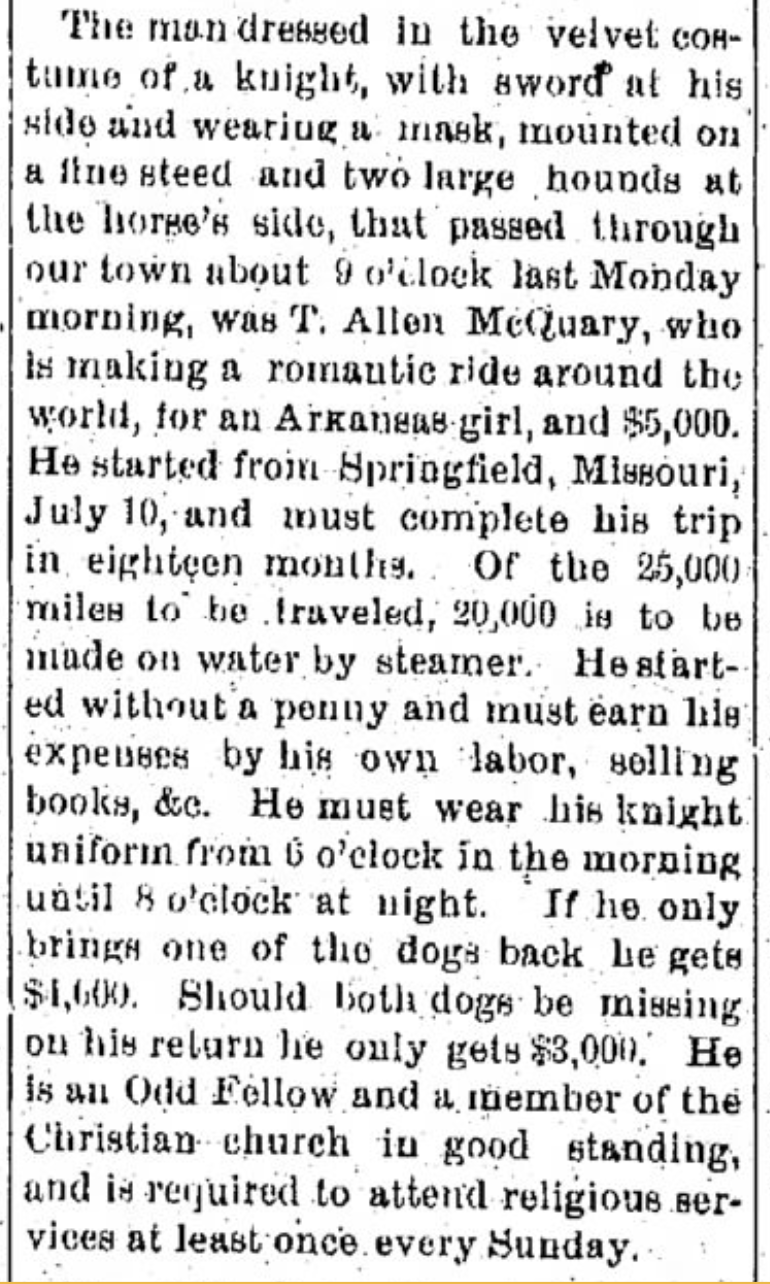
Cambridge City, Indiana — The Cambridge City Tribune, October 14, 1897
Ohio & Kentucky: The Turning Point
Cincinnati proved to be McQuary's salvation. The nave of the church reverberated, the girls swooned and mooned, and he sold 200 booklets at a dime apiece—a whopping $183.00 in total. With his chin up and banners snapping, he rode south into Kentucky, following the Big Sandy to Pikeville and through the mountains at Pound Gap.

Cincinnati, Ohio — The Cincinnati Post, October 19, 1897

Springfield, Missouri — Springfield Leader and Press, November 26, 1897
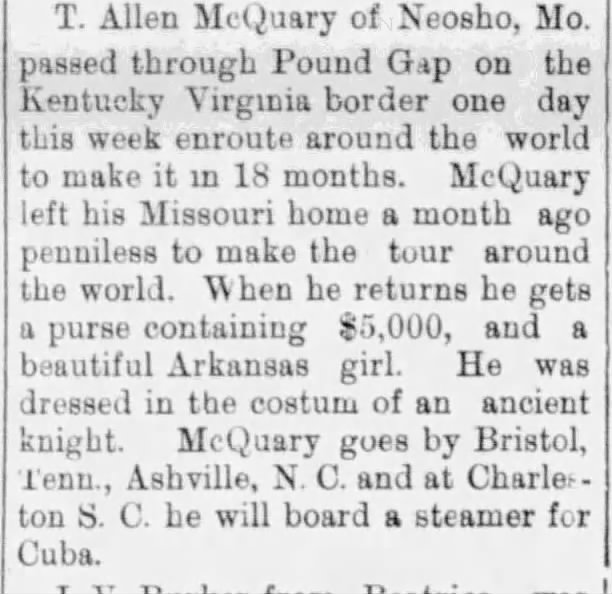
Barbourville, Kentucky — The Mountain Echo, November 26, 1897
Tennessee & North Carolina: Through the Mountains
A pass through Tennessee—Bristol and Johnson City—then another pass through North Carolina at Asheville (named for Sam Ashe, not the Yoruban life force).
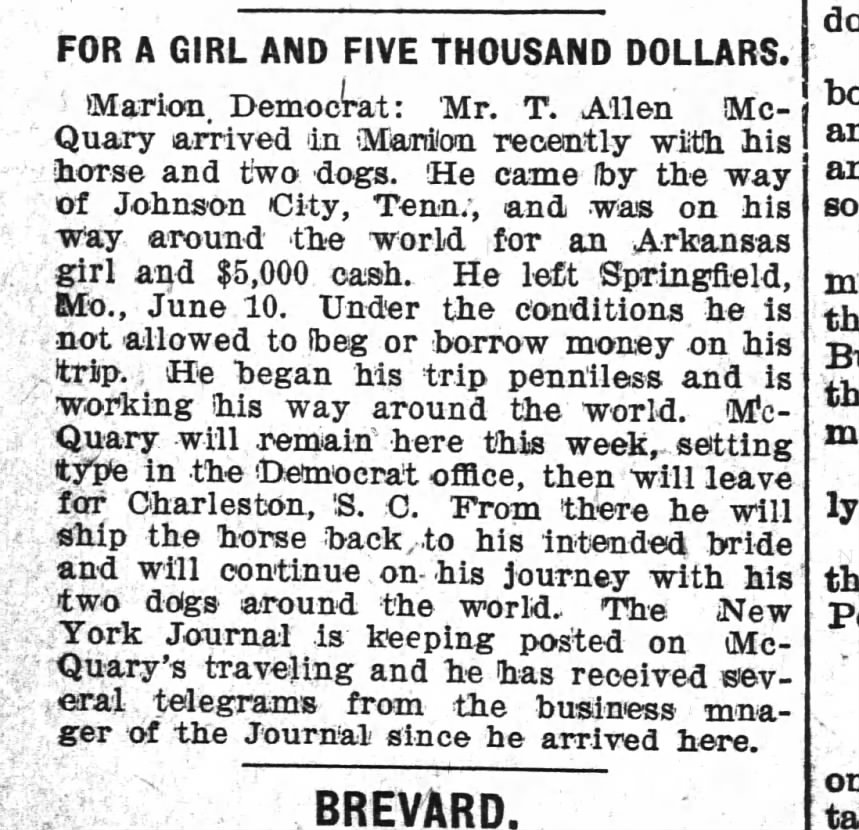
Asheville, North Carolina — The Asheville Times, December 12, 1897
South Carolina: The Final Stretch
A sweeping traverse across South Carolina—through Laurens and Yorkville—culminated in a riotous lecture at the magnificent Charleston Gold Club. And then there was naught but ocean all the way to the horizon.
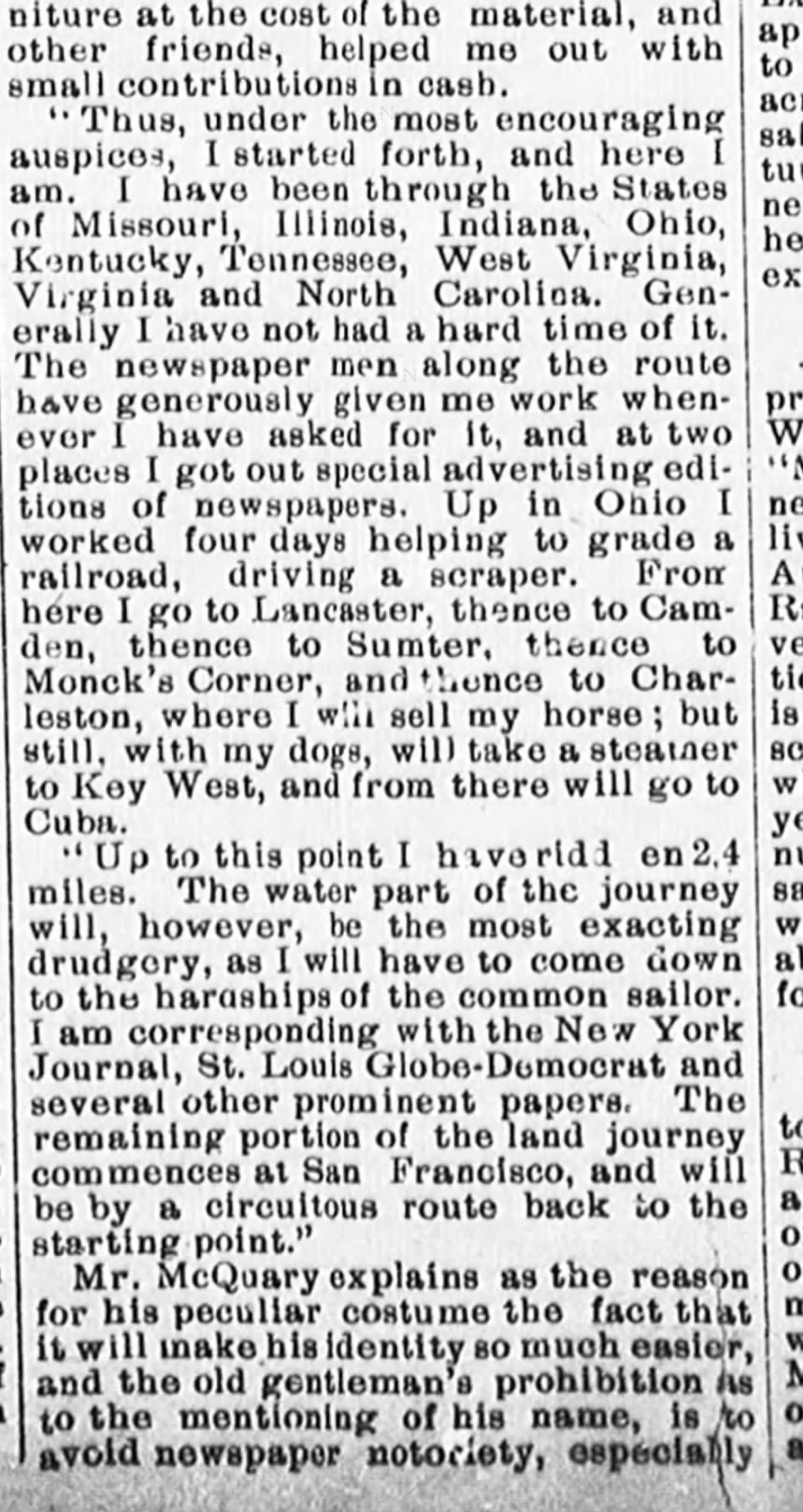
Laurens, South Carolina — The Laurens Advertiser, January 4, 1898

York, South Carolina — Yorkville Enquirer, December 25, 1897
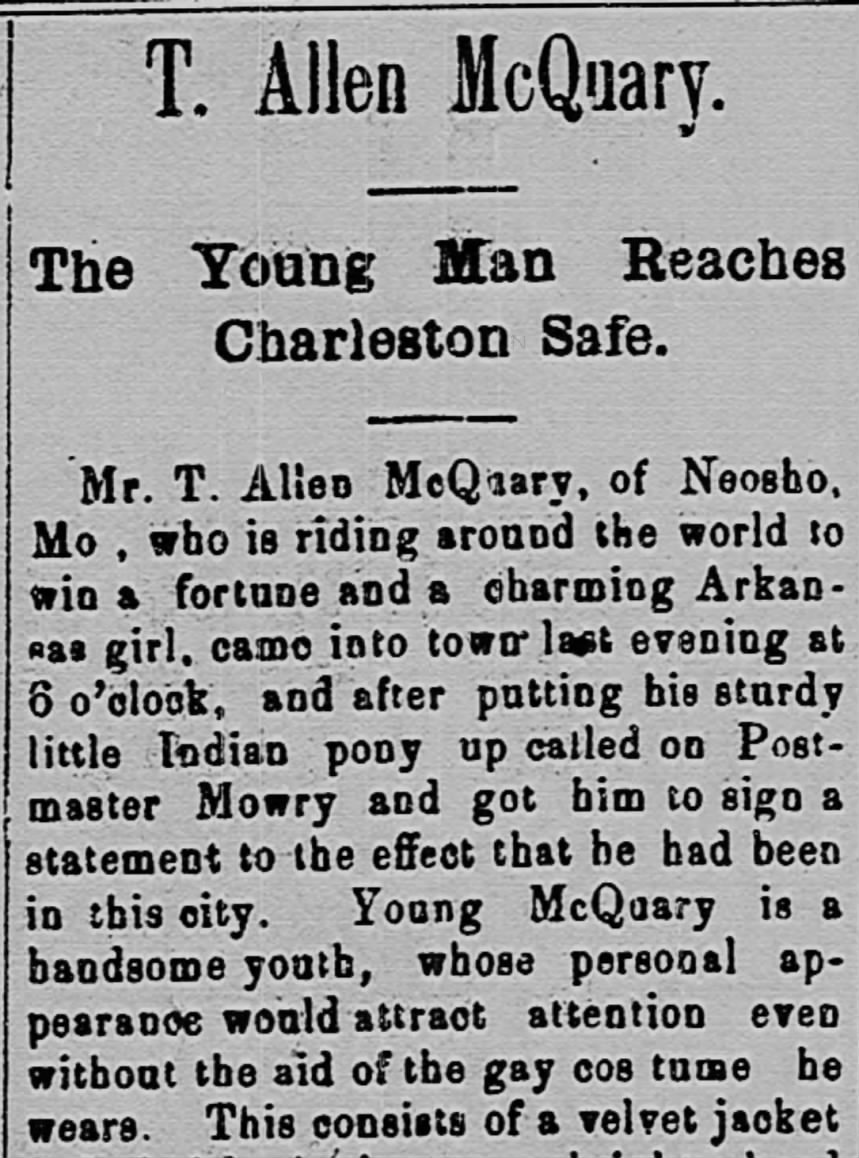
Sumter, South Carolina — The Watchman and Southron, January 26, 1898
Departure for Jacksonville
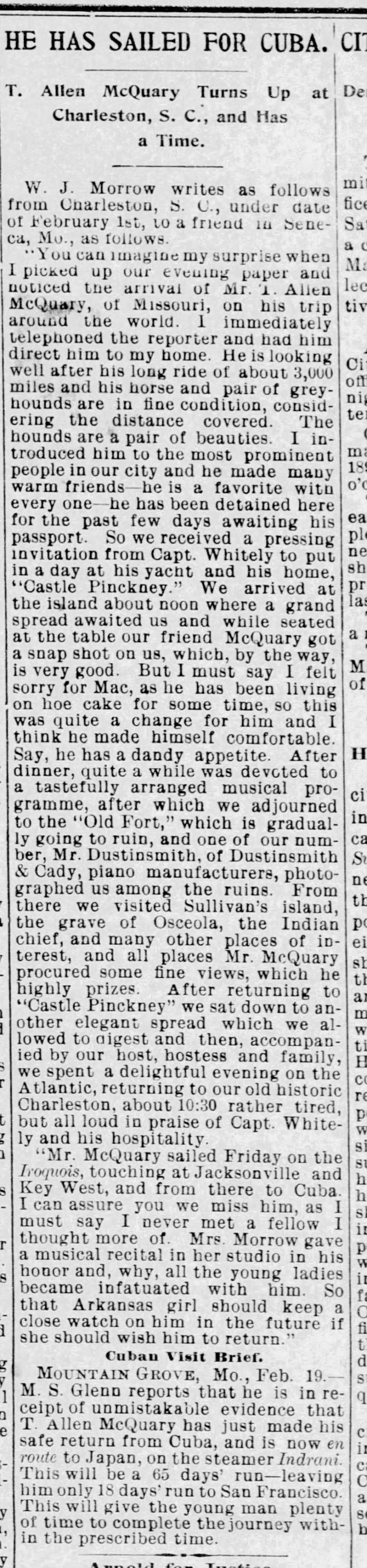
Clinton, Missouri — Henry County Democrat, February 24, 1898
The SS Iroquois and the Coastal Route
In late January or early February 1898, McQuary departed Charleston Harbor aboard one of the steamships running the Atlantic coastal route to Jacksonville, Florida. Contemporary accounts mention the SS Iroquois and another vessel called the Orange Blossom as options for this journey.
The SS Iroquois was a Clyde Steamship Company vessel built in 1888 by William Cramp & Sons of Philadelphia—notably the first steel commercial steamship built in America. She ran the New York-Charleston-Jacksonville route, carrying passengers and cargo along the Atlantic seaboard. The Clyde Line was a major carrier connecting the industrial Northeast with the warmer ports of the South.
View the Library of Congress photograph of the SS Iroquois at Jacksonville →
Historical Context: The USS Maine
On February 15, 1898, the USS Maine exploded in Havana Harbor, killing over 260 crew members. The disaster inflamed American public opinion against Spain and became a catalyst for the Spanish-American War, which would begin just two months later.
In the fictional account of the Purple Knight's journey, McQuary's ship was prevented from docking in Havana due to the chaos following the Maine's destruction—an event that would reshape American history and McQuary's own travels through the Caribbean.